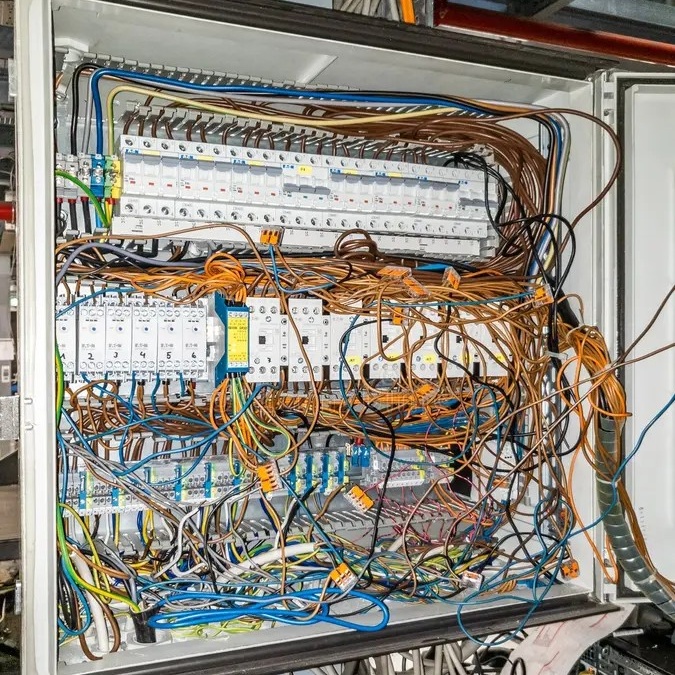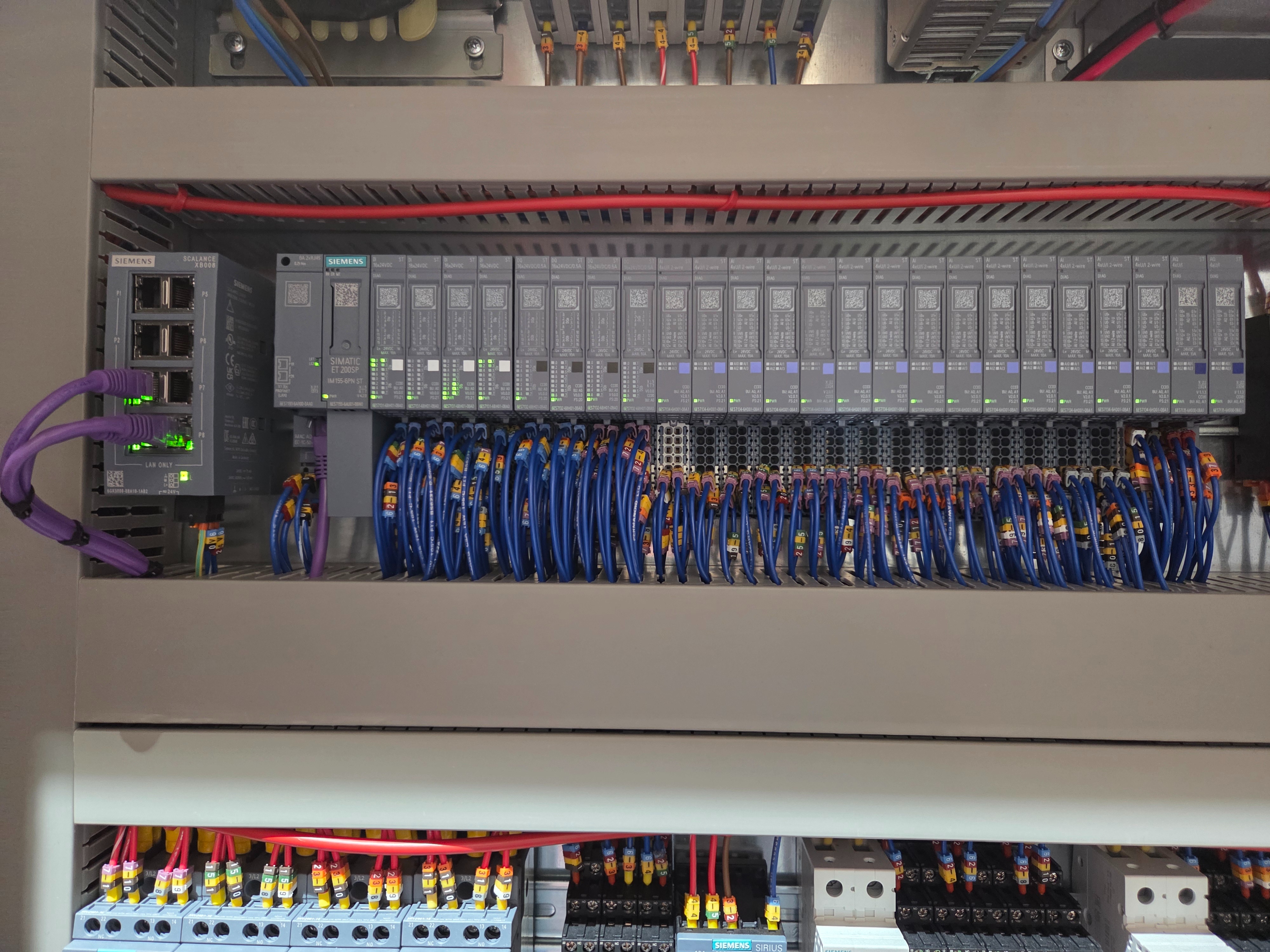

A maintenance manager preparing for an insurance underwriter's visit pulls the control panel documentation pack for the site's three motor control centres. The BS EN 61439 design verification reports are present for all three panels. The routine verification records are present for the original builds. The as-built schematics match the installations as they were commissioned eight and eleven years ago respectively.
What is missing — across all three panels — is the documentation of the modifications each panel has received across its life. A protection-coordination adjustment on panel two when an upstream supply transformer was upgraded. A control-logic change on panel one after a production-line reconfiguration. A contactor family substitution on panel three when the original manufacturer exited the UK market.
Each modification was made competently. None was documented back into the panel's verification evidence or the schematic pack. The underwriter's review flags the documentation drift as a risk-pricing factor. The audit position for the three panels is defensible in principle but cannot be evidenced in practice.
Compliance is established at specification stage. It is maintained — or lost — across the installation's operational life. The engineering discipline that keeps a panel's compliance position defensible between audits is not glamorous: routine documentation of modifications, currency checks on verification evidence, integration of compliance review into the same maintenance calendar everything else on the site runs from. An installed panel's compliance position at audit depends on what happened between commissioning and the audit, not on what was delivered at handover.
💡 Key Insight: A panel that held full BS EN 61439 compliance at handover can lose it silently across eight or eleven years of competent but undocumented maintenance. The compliance position the audit tests is the one the maintenance discipline has held between audits — not the one the commissioning pack established.
What maintaining compliance actually involves
BS EN 61439 compliance is two engineering positions held together across the installation's life. The first is that the panel still matches the verified design — its configuration, its component selection, its protection coordination, its documented behaviour under fault conditions. The second is that the documentation evidencing the match can be retrieved, read, and presented to an auditor or underwriter without reconstruction.
An installed panel can hold the first position and lose the second. It can also hold the second on paper while the installed state has drifted past it. Maintaining compliance means holding both positions together, continuously.
The three conditions most commonly responsible for compliance drift are predictable and specific:
- Undocumented modifications — the single largest driver. A contactor substituted, a protection setting adjusted, a control-logic change implemented during a shutdown, a field wiring change after a process modification. Each is a competent piece of maintenance engineering; none is a compliance event unless the documentation is updated to reflect it. Over years, undocumented modifications compound into a panel whose installed state no longer matches its verified design.
- Verification evidence drift — BS EN 61439 design verification addresses the panel's rated characteristics against the conditions it was verified for. Supply changes upstream, environmental changes around the installation, or modifications to protected circuits downstream can invalidate parts of the verification evidence without any change to the panel itself. An annual review against current conditions catches this; a panel whose verification has not been reviewed against current conditions in eight years may be operating outside its verified envelope.
- Documentation location loss — the panel documentation pack exists somewhere on the site, or with a previous supplier, or on a laptop that has been replaced, or in a filing system that has been reorganised. When the auditor asks, the pack cannot be retrieved within the audit window, and the compliance position becomes defensively thin regardless of its underlying integrity.
❗ Compliance is a position, not a certificate: An installed panel's compliance position is the sum of the design verification, the routine verification, the as-built schematics, the modification documentation since commissioning, and the ability to retrieve all of these within an audit window. Maintenance of the position is engineering work, not administration — and it is the maintenance discipline that determines whether the panel remains audit-ready between inspections.
Documenting modifications while the engineering context is live
The cheapest time to document a modification is the moment the modification is made. The most expensive is during audit preparation, when the engineering context has dispersed across time, staff changes, and the gap between the work being done and the documentation being remembered. Every modification to a critical control panel should produce a documented change to the panel's records — schematic update, verification-evidence note, change log entry — while the engineer who made the change is still on site and still holds the context.
In practice, this means treating modification documentation as part of the work order rather than as an administrative follow-up. A work order that completes a physical modification without updating the panel's records is a work order that has not closed properly. The same schematic pack that was handed over at commissioning is the reference that every subsequent modification updates. EPLAN-generated schematics support this naturally because the format is update-friendly; static-PDF schematic packs resist modification updates by their format, which is the common reason site schematic packs drift out of correspondence with installed panels over a few years.
💡 The thirty-minute rule: A modification that takes an hour of physical work typically requires about thirty minutes of documentation work — schematic update, protection-coordination note, verification-evidence review, change log entry. A modification that skips the thirty minutes saves half an hour today and costs several days of reconstruction when an audit, insurance review, or subsequent modification requires the engineering context the skipped documentation was meant to hold.
Where the modification affects the panel's verified characteristics — a protection setting change, a component family substitution, a change to a circuit's rated characteristics — the modification triggers a verification-evidence review, not just a schematic update. The question is whether the modification remains inside the verified envelope for that panel, or whether it has moved the panel outside part of its original verification. The first case is a documentation event. The second is an engineering event that may require partial re-verification. Neither is visible unless the review actually happens.
🚫 Common mistake: Treating documentation as an administrative task that follows the engineering work. A modification without its documentation is engineering work that has not closed — regardless of how cleanly the physical change was executed. The work order discipline has to include the documentation inside its close-out criteria, not alongside them.
Relevant JBB service: Control Panels
How BS EN 61439 sits alongside the adjacent standards
BS EN 61439 sits inside a wider regulatory and standards environment that shapes the maintenance discipline. The relationships matter because an auditor does not review BS EN 61439 alone — the inspection touches adjacent frameworks, and the panel's compliance position has to hold across them together.
BS 7671 and the wiring regulations govern the installation the panel sits within. BS EN 61439 compliance on the panel does not absolve the installation of its own compliance position — the earthing arrangements, the final circuits, the inspection and testing discipline under Part 6 of BS 7671 all apply independently. The periodic inspection and testing required under BS 7671 intersects with panel compliance at the point where the inspection encounters the panel; findings on the installation can surface findings on the panel that the panel's own verification evidence would not have flagged.
BS EN ISO 13849 and machinery safety governs the safety-related control functions where the panel hosts them. A panel with certified safety functions carries its certification through the functional safety standards, not through BS EN 61439 alone. Modifications to a safety-related control function have to go through the change-control discipline the certification requires — which is tighter than the general modification discipline BS EN 61439 compliance requires. Maintaining the certification and maintaining the BS EN 61439 compliance are separate engineering disciplines operating on the same panel.
UKCA marking replaced CE marking for most products placed on the UK market after Brexit. For industrial control panels specifically, UKCA marking evidences conformity with UK-designated standards including BS EN 61439. The compliance position includes the UKCA marking alongside the verification evidence; a panel whose UKCA marking cannot be evidenced against current UK-designated standards is a panel with a gap in its compliance documentation regardless of its engineering integrity.
⚠ Adjacent-framework gaps are hard to see from inside the panel: A panel's BS EN 61439 compliance can be current while its BS 7671 installation compliance has drifted, its safety-function certification has lapsed through an undocumented modification, or its UKCA marking references a superseded version of a designated standard. Each of these surfaces at audit separately. The maintenance discipline has to cover all four regimes together, not BS EN 61439 alone.
What the audit encounter actually looks like
An auditor arriving to review a control panel's compliance position does not conduct the review in the abstract. The auditor works from the documentation pack toward the installed panel, comparing what the documentation claims against what the panel is. A pack that presents the current state cleanly produces a short audit. A pack whose claims diverge from the installed state produces a long one, with findings that expand as divergences are discovered.
The auditor's working sequence is recognisable across most regulatory and insurance regimes:
- Start with the design verification report and confirm the panel's rated characteristics are as declared
- Move to the routine verification records and confirm the individual assembly was tested against the verified design
- Examine the as-built schematics and cross-reference the panel's physical state to the documented circuits
- Ask for the modification history since commissioning and follow specific modifications through to the updated documentation
- Check the UKCA marking against the panel and the current designated-standards list
At each step, an absent document or a document whose contents do not match the installed state becomes a finding.
What to have retrievable within a ten-minute window
- ✅ BS EN 61439 design verification report — rated characteristics declared and verification route stated
- ✅ Routine verification records — individual assembly tested against the verified design
- ✅ As-built schematics — current state, matching the panel as installed and modified
- ✅ Modification log since commissioning — each change with date, description, and engineering justification
- ✅ UKCA marking evidence — panel's UKCA declaration referenced to current UK-designated standards
- ✅ Protection coordination study — current state, reviewed against any supply or load changes since commissioning
If any of these takes more than ten minutes to retrieve, the audit position has drifted into reconstruction territory — regardless of the underlying engineering integrity.
The audit experience a site controls is the one where its documentation pack carries the current state of each panel cleanly. The audit experience a site does not control is the one where the pack is reconstructed for inspection — because the reconstruction itself surfaces the gaps.
Where JBB fits: operational compliance as continuous engineering
JBB delivers control panel operational compliance as an integrated engineering discipline rather than as a pre-audit exercise. The methodology applies across the panel's life — from specification through modification through audit preparation — with the same engineering team holding the context at each stage.
JBB Method: Assess → Modernise → Protect → Prevent → Support
- Assess: review the installed panel base against its documented verification evidence, identifying panels where the installed state has drifted from the verified design through undocumented modifications, supply changes, or documentation loss.
- Modernise: where a panel's compliance position cannot be remediated through documentation alone, define the engineering response — partial re-verification, schematic reconstruction, or planned replacement against current conditions.
- Protect: modifications documented back into the panel's records during the modification work, not as a follow-up; EPLAN-generated schematics maintained as the current reference; verification-evidence reviews follow any modification that touches a verified characteristic.
- Prevent: compliance review integrated into the site's maintenance calendar on a cycle matched to the audit regime, so the audit position is continuously maintained rather than reconstructed for inspection.
- Support: the same JBB team that designed, built, and documented the original panel holds the engineering context for subsequent modifications, so the modification documentation sits within a coherent engineering memory rather than a distributed one.
During Assess, engineers review the installed panel base against the verification evidence the original specification produced, and identify where the installed state, the environmental conditions, or the documentation has drifted from the verified design. Modernise addresses panels where the drift cannot be closed through documentation alone — partial re-verification where a modification moved part of the panel outside its verified envelope, schematic reconstruction where the documentation has been lost, or planned replacement where the panel's engineering position cannot be remediated against current conditions.
Protect is the day-to-day discipline: modifications documented within the work order that authorised them, EPLAN-maintained schematic packs that support update without reconstruction, verification-evidence reviews triggered by modifications that touch verified characteristics. Prevent integrates compliance review into the site's maintenance calendar — typically an annual review keyed to the audit cycle — so the position is maintained through routine engineering rather than through pre-audit preparation. Support retains the engineering context within the same JBB team that designed, built, tested, and documented the panels, which is what makes the modification documentation discipline practically sustainable rather than administratively burdensome. JBB has been delivering this continuity of engineering responsibility to UK industrial sites since 1966, with NICEIC-approved electrical engineering underpinning the compliance work across specification, manufacture, and installed-base maintenance.
✅ What "good" looks like: Every panel's documentation pack reflects the current installed state. Every modification since commissioning is recorded back into the schematics and the verification evidence. The documentation pack can be retrieved within ten minutes of an auditor's request. Adjacent-framework compliance — BS 7671, BS EN ISO 13849, UKCA marking — is held alongside BS EN 61439 rather than treated as a separate concern. The audit position is continuously maintained, not reconstructed.
Frequently Asked Questions
What risks does compliance drift between audits create?
Three layers of risk. At the engineering layer, the installed panel may have moved outside part of its verified envelope through undocumented modifications or supply changes, leaving operational characteristics — short-circuit withstand, protection coordination, temperature rise — no longer evidenced against current conditions. At the documentation layer, missing modification records or drifted as-built schematics mean the compliance position cannot be evidenced even where the engineering integrity is intact. At the adjacent-framework layer, BS 7671, safety-function certification, and UKCA marking can all drift independently of BS EN 61439 and surface as separate audit findings. Each layer compounds across the installation's life if the maintenance discipline does not cover all three together.
How does compliance affect this?
Compliance maintenance is the work that keeps the panel's engineering position defensible between audits. The BS EN 61439 design and routine verification evidence produced at commissioning is the baseline. The modifications and operating-condition changes across the panel's life either stay inside that envelope or move outside it — and the documentation discipline is what determines whether the site can tell the difference. Regulators and insurance underwriters read the documentation pack as closely as they read the panel; a pack that cannot be reconciled to the installed state is a finding regardless of the underlying engineering integrity.
What preventive measures should be taken?
Document every modification inside the work order that authorised it, not as a follow-up. Trigger a verification-evidence review whenever a modification touches a verified characteristic. Maintain schematics in an update-friendly format (EPLAN is the industrial standard) rather than as static PDFs that resist modification. Run an annual compliance review against the installed state, keyed to the audit calendar, so gaps are identified in routine engineering rather than under inspection pressure. Cover BS 7671, BS EN ISO 13849, and UKCA marking together with BS EN 61439, since each has its own maintenance cycle and each surfaces at audit separately.
How do modern systems improve reliability?
EPLAN-generated documentation supports modification discipline because the format is update-friendly; a change to the schematic pack is a routine engineering task rather than a reconstruction project. CMMS-integrated work-order systems can link modification documentation to the work orders that authorised them, so a modification cannot close without the documentation step. Single-engineering-partner models preserve the engineering context across the installation's life — the team that designed and built the panel holds the modification history, which is what makes retrospective reconstruction unnecessary. Each of these shifts compliance from a pre-audit exercise to a continuous engineering discipline.
Next Step: Request a Compliance & Breakdown Prevention Assessment
A JBB Compliance & Breakdown Prevention Assessment reviews the current compliance position of your installed panel base, reconciles each panel against its documentation pack, identifies where verification evidence or adjacent-framework compliance has drifted from the installed state, and scopes the remediation work into the site's maintenance calendar rather than leaving it for audit pressure to force. The assessment is carried out by the JBB engineering team — the same team that designs, manufactures, tests, and documents the panels they assess — with EPLAN-generated as-built schematics produced where needed and the compliance review cycle integrated with the site's maintenance calendar.
Request a Compliance & Breakdown Prevention Assessment today to establish the current compliance position of your installed panel base and the maintenance discipline that will hold it between audits.