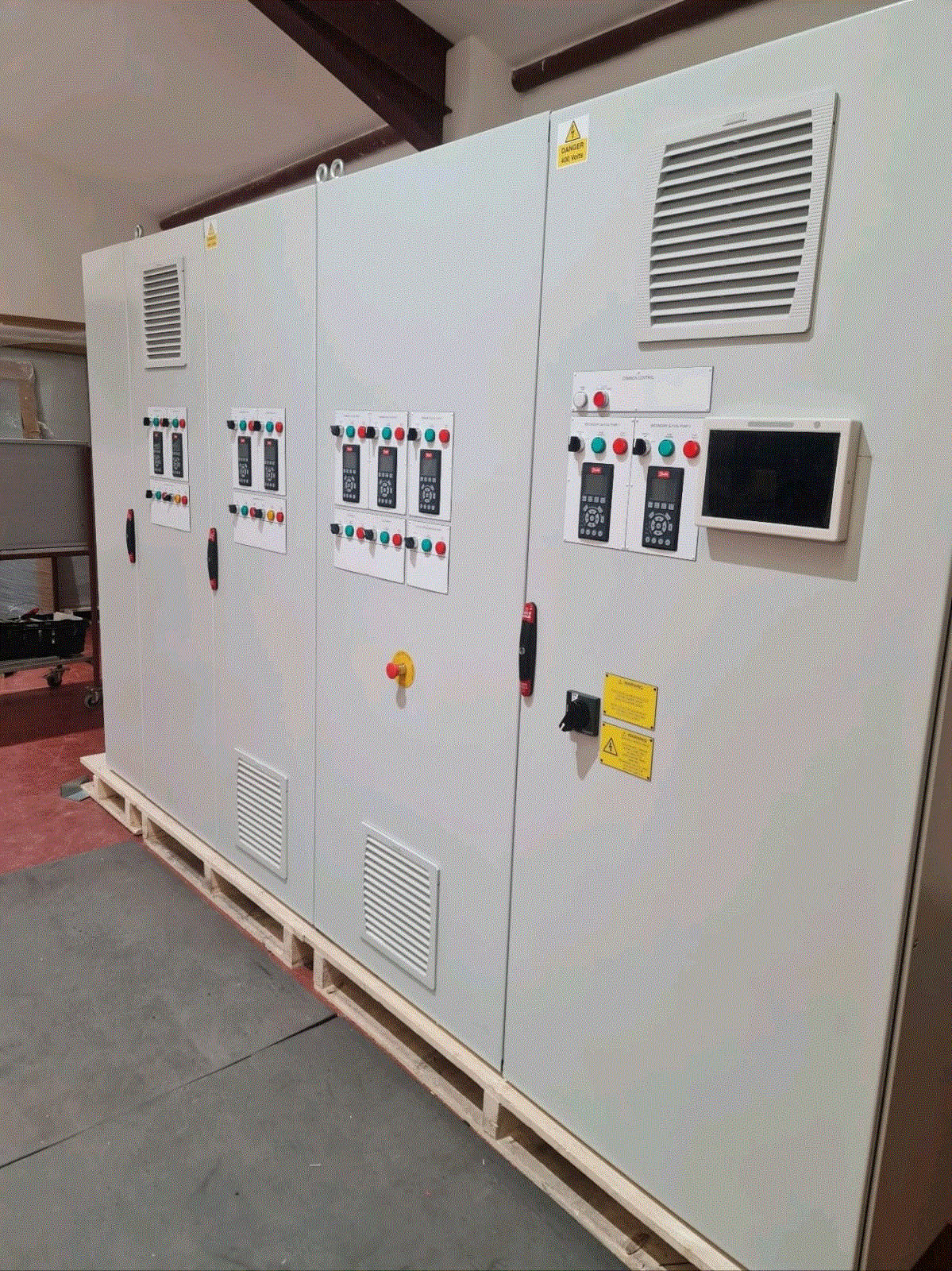
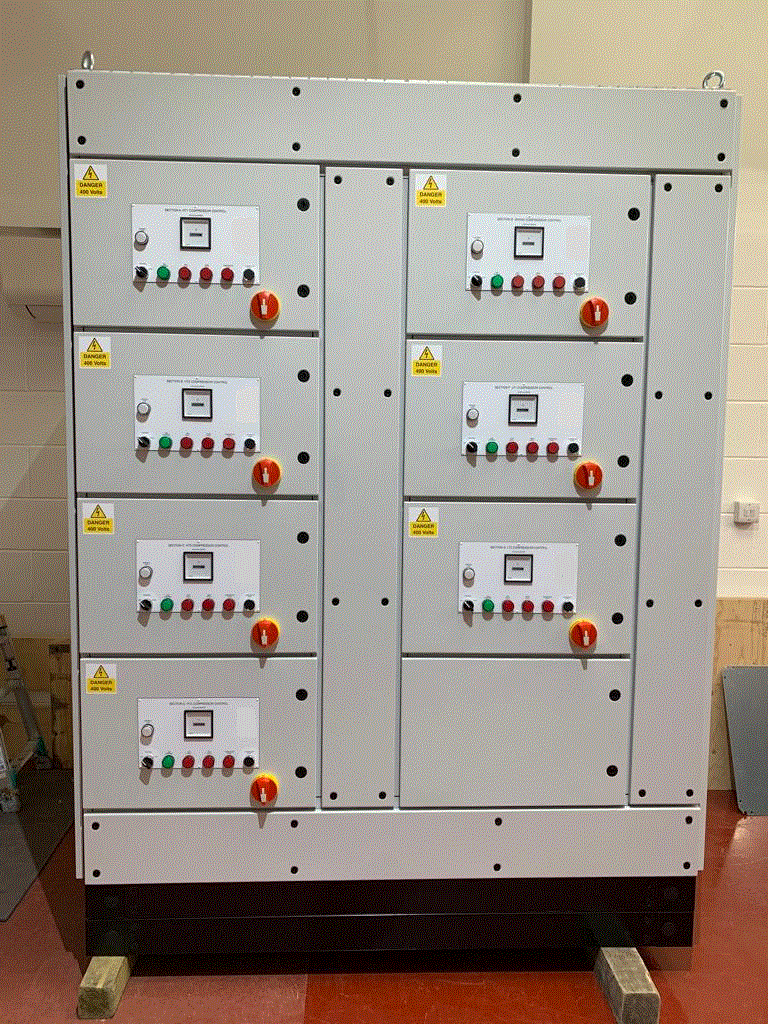
Industrial control panels sit at the centre of every production line, refrigeration system, and automated process. When they fall behind modern standards, the consequences spread quickly: downtime, compliance failures, undocumented risks, and rising maintenance cost. This guide explains how to specify and modernise industrial control panels in a way that protects uptime, ensures BSEN60204-1 compliance, and gives engineering teams long-term confidence in their control infrastructure.
Why Modern Control Panels Matter
A control panel is more than a collection of components. It is the operational brain of your machinery. When the internal design standards slip or documentation is missing, failures become harder to diagnose and risks harder to control. For temperature-critical and compliance-driven sectors like food manufacturing, cold storage, and pharmaceuticals, panel reliability is directly tied to product integrity and audit readiness.
A well-designed control panel aligns with functional requirements, application needs, and safety standards. Key considerations such as proper enclosure selection, adequate space for components, and adherence to safety and compliance standards are critical for ensuring reliability and regulatory compliance.
💡 Key Insight:
Most panel failures originate from design decisions made years earlier - undersized components, outdated protection devices, inaccessible layouts, or undocumented modifications. Modernisation addresses root causes, not just symptoms.
Types of Control Panels
Control panels are a cornerstone of industrial automation, providing the interface between electrical power and the complex systems that drive manufacturing facilities. Selecting the right type of control panel is essential for ensuring the proper functioning of industrial equipment, optimising operational efficiency, and keeping maintenance costs under control. Here are the most common types of control panels found in industrial settings:
Motor Control Panels: Designed specifically to manage and monitor the operation of motors, these panels are vital for controlling start/stop functions, speed, and protection of motors used in various industrial processes. They help maintain efficient operation and extend equipment lifespan by safeguarding against overloads and faults.
Process Control Panels: Used extensively in manufacturing facilities, process control panels regulate and monitor variables such as temperature, pressure, and flow rate. By automating these critical parameters, they ensure consistent product quality and streamline complex industrial processes.
Power Distribution Panels: These panels are responsible for distributing electrical power throughout a facility, ensuring that each system and piece of equipment receives a reliable and stable power supply. Properly designed power distribution panels help prevent electrical overloads and reduce the risk of downtime.
PLC Control Panels: Featuring programmable logic controllers, PLC control panels bring advanced automation capabilities to industrial equipment. They enable precise control, real-time monitoring, and easy integration with other automation systems, making them a key feature in modern industrial settings.
SCADA Control Panels: Leveraging supervisory control and data acquisition technology, SCADA panels allow for remote monitoring and control of industrial processes. This not only enhances operational efficiency but also reduces maintenance costs by enabling proactive management of equipment and systems.
Each type of control panel is engineered to meet specific operational requirements, environmental conditions, and system integration needs. By choosing the appropriate control panel for each application, industries can achieve greater reliability, reduce maintenance interventions, and support the seamless operation of their manufacturing processes.
Common Risks Found in Ageing Control Panels
Across JBB Electrical’s control system assessments, several recurring risks appear in older or poorly specified panels. These issues increase downtime, undermine compliance, and create hidden vulnerabilities that only surface during failures or audits. Short circuits are a significant risk in ageing industrial control panels, especially when wiring is not properly placed or treated, underscoring the importance of correct wiring practices for electrical safety.
📊 Failure Data:
Many industrial panel faults traced during thermal imaging inspections originate from terminal hotspots, cable deterioration, or ageing protection devices.
1. Obsolete or unsupported components
End-of-life PLCs, discontinued overloads and relays, and outdated HMIs make maintenance slow and expensive. When a component becomes unavailable, downtime stretches from hours to days.
2. Lack of BSEN60204-1 compliant design
Many older panels pre-date current safety requirements. Missing separation, inadequate protective bonding, undersized neutral bars, or poor cable management all represent compliance exposures.
3. Poor documentation and drawing control
In many facilities, schematics are either outdated, incomplete, or missing entirely. This slows fault finding and creates risk when modifications are made without control.
❌ Common Mistake:
Treating drawings as optional. Control panels must have accurate, updated schematics, I/O schedules, and cable numbering. Without documentation integrity, even minor faults can become major outages.
4. Non-segregated wiring and poor internal layout
Power and control wiring must be separated to prevent interference and improve safety. Proper cable routing, including the use of cable trays, is essential for protecting conductors from physical damage, maintaining a tidy setup, and ensuring compliance with electrical safety standards. The architecture of industrial control panels typically includes terminal blocks and DIN rails, which help organize electrical connections and mount components efficiently. Older panels often use mixed routing, making upgrades difficult and fault finding slow.
5. Inadequate cooling, thermal stress, and electrical safety risks
Fans, filters, and enclosures degrade over time. Panel fans cool heat sources within an enclosure, effectively preventing the creation of hot spots. Ensuring sufficient airflow is crucial for proper heat dissipation, safety, regulatory compliance, and the longevity of electrical components, especially with VSDs, soft starters, and high-density I/O modules.
⚠ Critical Risk:
Thermal stress is one of the top failure drivers in industrial plants. If components regularly exceed their thermal rating, failures are inevitable and often sudden.
How to Correctly Specify an Industrial Control Panel
A well-specified panel follows a structured engineering process. When specifying an industrial control panel, it is essential to consider various components, control panel enclosures, and electrical components to ensure optimal performance and safety. Electrical panels and electrical control panels serve as the hub for power distribution and control of electrical equipment in industrial settings. Electrical installations in these environments are complex and require sufficient space within enclosures for component wiring, heat dispersal, and future expansion. The process begins with understanding operational requirements and ends with commissioning and full documentation control.
📋 Specification Framework: JBB Control Panel Specification Method
1. Operational Requirements: Load characteristics, I/O count, environmental conditions, and risk profile.
2. Compliance Requirements: BSEN60204-1, BS7671, PUWER, cyber-readiness, and sector-specific obligations.
3. Design Standards: CAD standards (EPLAN/SEE), cable marking, segregation, and protection coordination.
4. Component Specification: PLC platform, breakers, contactors, drives, power supplies, relays, and communication modules.
5. Manufacturing Quality: In-house wiring standards, termination torque, routing, and labelling systems.
6. Testing & Commissioning: FAT, SAT, I/O verification, load testing, and documentation handover.
Panel functionality includes monitoring inputs from sensors and controlling outputs to execute programmed tasks, ensuring safety and efficiency. Enclosures are boxes that house the control panel and ensure the safety of the panel. The correct layout of various components is crucial for the proper functioning of the panel, as well as for production line maintenance and troubleshooting.
Step 1 - Start with operational and electrical load requirements
ℹ BSEN60204-1 Reference:
Control panels must comply with BSEN60204-1 regarding protective measures, overcurrent protection, cable sizing, and internal wiring standards. It is important to specify panels that support all electrical equipment in the facility, as industrial electrical installations ensure that electrical equipment operates safely and efficiently.
Engineers must define voltage, current, inrush loads, fault levels, and the number of I/O points before designing the layout. Undersizing components is a leading cause of premature failure.
Step 2 - Define the automation and control platform
Specify PLCs and HMIs that are future-proof, widely supported, and available for at least 10 years. Obsolete platforms create long-term risk and lock operations into emergency replacements.
Modern industrial control panels leverage automation technology, integrating components such as PLCs, smart relays, and advanced industrial connectivity to streamline control, improve efficiency, and enable remote operation. These panels now incorporate smart technologies like IoT and AI for real-time diagnostics and predictive maintenance, helping to reduce downtime and optimise performance. Additionally, industrial connectivity through Ethernet switches and communication gateways allows control panels to communicate seamlessly with other systems within the facility.
Step 3 - Plan for maintainability
Panels must be accessible, cleanly routed, and documented. Sufficient space should be allocated within the enclosure for proper wiring, heat dispersal, and future expansion, which also helps ensure safety and compliance. Cable numbering systems and terminal layouts should allow engineers to trace faults quickly. Using quality components in industrial control panels helps reduce downtime and makes maintenance easier.
💡 Pro Tip:
Always specify spare capacity. At least 25-30 percent spare terminal capacity and DIN-rail space ensures future expansion without redesign.
How to Modernise Existing Industrial Control Panels
Upgrading an existing panel requires a structured engineering approach. Customisation of industrial control panels is essential to meet specific operational needs and enhance performance. JBB’s method ensures that modernisation reduces risk while improving reliability, maintainability, and compliance.
👉 Step 1: Assess
Perform a full control panel condition assessment covering component age, load performance, thermal data, compliance status, and documentation integrity.
👉 Step 2: Modernise
Replace obsolete PLCs, upgrade protection devices, re-route wiring, and install modern HMIs and communications to achieve long-term resilience.
👉 Step 3: Protect
Install surge protection devices to protect electrical and electronic equipment from voltage surges or transient voltage spikes, and improve enclosure cooling. Circuit breakers are essential for protecting electrical circuits and equipment from damage caused by excessive current flow or short circuits. Optimise segregation, and ensure thermal imaging becomes part of routine checks.
Energy efficiency is increasingly important in the design of industrial electrical systems, with modern control panels focusing on cost-effective and environmentally friendly solutions. Integration of lighting systems and security systems, such as CCTV, alarms, and access control, is also a key aspect of comprehensive electrical installations.
👉 Step 4: Prevent
Apply preventive maintenance: tightening torque checks, thermal imaging, cleaning, software backups, and panel environment monitoring.
👉 Step 5: Support
Ensure updates, documentation, PLC backups, and remote support are maintained across the lifecycle.
Control Panel Testing and Verification
Thorough testing and verification are essential steps in the control panel design process, ensuring that electrical systems operate safely and efficiently in demanding industrial environments. Proper testing not only safeguards against electrical hazards but also supports compliance with safety regulations and reduces the risk of unplanned downtime.
Key aspects of control panel testing and verification include:
Visual Inspections: A detailed visual check of the control panel, electrical enclosures, and internal components helps identify signs of wear, damage, or improper installation. This step is crucial for spotting potential issues before they impact system performance.
Functional Testing: This involves verifying that all electrical circuits, automation systems, and safety devices operate as intended. Functional testing ensures that the control panel responds correctly to inputs and that all safety interlocks and emergency protocols are in place.
Performance Testing: Panels are subjected to various environmental factors such as temperature, humidity, and vibration to confirm their ability to maintain optimal performance under real-world conditions. This is especially important for panels installed in harsh industrial settings.
Safety Testing: Ensuring compliance with electrical safety standards, such as the national electrical code and other relevant safety regulations, is a critical part of the verification process. Safety testing checks for proper grounding, surge protection devices, and the correct operation of circuit breakers and other safety systems.
Verification also includes a thorough review of electrical schematics and documentation to confirm that the control panel meets all design and regulatory requirements. Regular inspections and maintenance, supported by clear documentation, help identify and address issues early, reducing maintenance costs and supporting the long-term reliability of industrial equipment.
By prioritising comprehensive testing and verification, facilities can ensure that their control panels deliver safe, reliable, and cost-effective performance, supporting the ongoing success of their automation systems and industrial processes.
How Modern Systems Improve Uptime and Reliability
✅ Reliability Gain:
Industrial control panels are critical for efficiency and safety in manufacturing plants, water treatment, energy, and other industries, as they help ensure reliable operations and reduced downtime. One cold-storage facility reduced unplanned downtime by modernising two decade-old control panels and upgrading their PLC platform.
1. Enhanced diagnostics
Modern PLCs provide event logs, fault codes, network diagnostics, and remote access, allowing engineers to identify issues rapidly. System monitoring is also essential, as it involves continuous data collection on variables such as motor speed and production progress.
2. Better thermal and electrical performance
Cooling improvements, modern drives, and correctly rated protective devices significantly reduce failure risk. Cooling systems manage the heat generated by electrical components in industrial control panels to prevent failure and ensure reliable operation. A main disconnect switch safely isolates the entire panel from the incoming power supply during maintenance or emergencies, enhancing safety. Motor starters provide a controlled and safe way to initiate and interrupt the power supply to motors, while variable frequency drives regulate the speed of an electric motor by adjusting the frequency and voltage of its power supply. Motor Control Centres (MCCs) manage multiple electric motors centrally by consolidating motor starters and drives, improving efficiency and organisation in industrial environments.
3. Reduced compliance exposure
Panels aligned with BSEN60204-1, PUWER, BS7671, and cyber readiness frameworks create a safer and audit-ready environment.
Frequently Asked Questions...
What risks does this issue create?
Ageing control panels increase the risk of downtime, electrical failure, overheating, fire compliance breaches, and product loss, particularly in temperature-critical operations.
How does compliance affect this?
Non-compliant panels expose businesses to safety risks and legal liability. BSEN60204-1 and PUWER requirements must be met during both specification and modernisation.
What preventive measures should be taken?
Preventive maintenance, thermal imaging, documentation control, scheduled component replacement, and panel cleaning all reduce long-term failure risk.
How do modern systems improve reliability?
Modern PLCs, HMIs, protection devices, and cooling systems significantly reduce downtime and improve fault detection, maintainability, and safety.
Next Steps
If your facility operates with ageing or undocumented control panels, a structured assessment is the most effective starting point.
❗ Important:
Control panels rarely fail without warning. Issues are almost always identifiable months in advance with proper engineering assessment and thermal imaging.
Book a JBB Electrical Compliance & Breakdown Prevention Assessment
JBB’s engineering method – Assess → Modernise → Protect → Prevent → Support – provides complete lifecycle protection for industrial control systems.
Request a Compliance & Breakdown Prevention Assessment today to gain full visibility over your control panels, compliance status, component lifecycle, and upgrade roadmap.