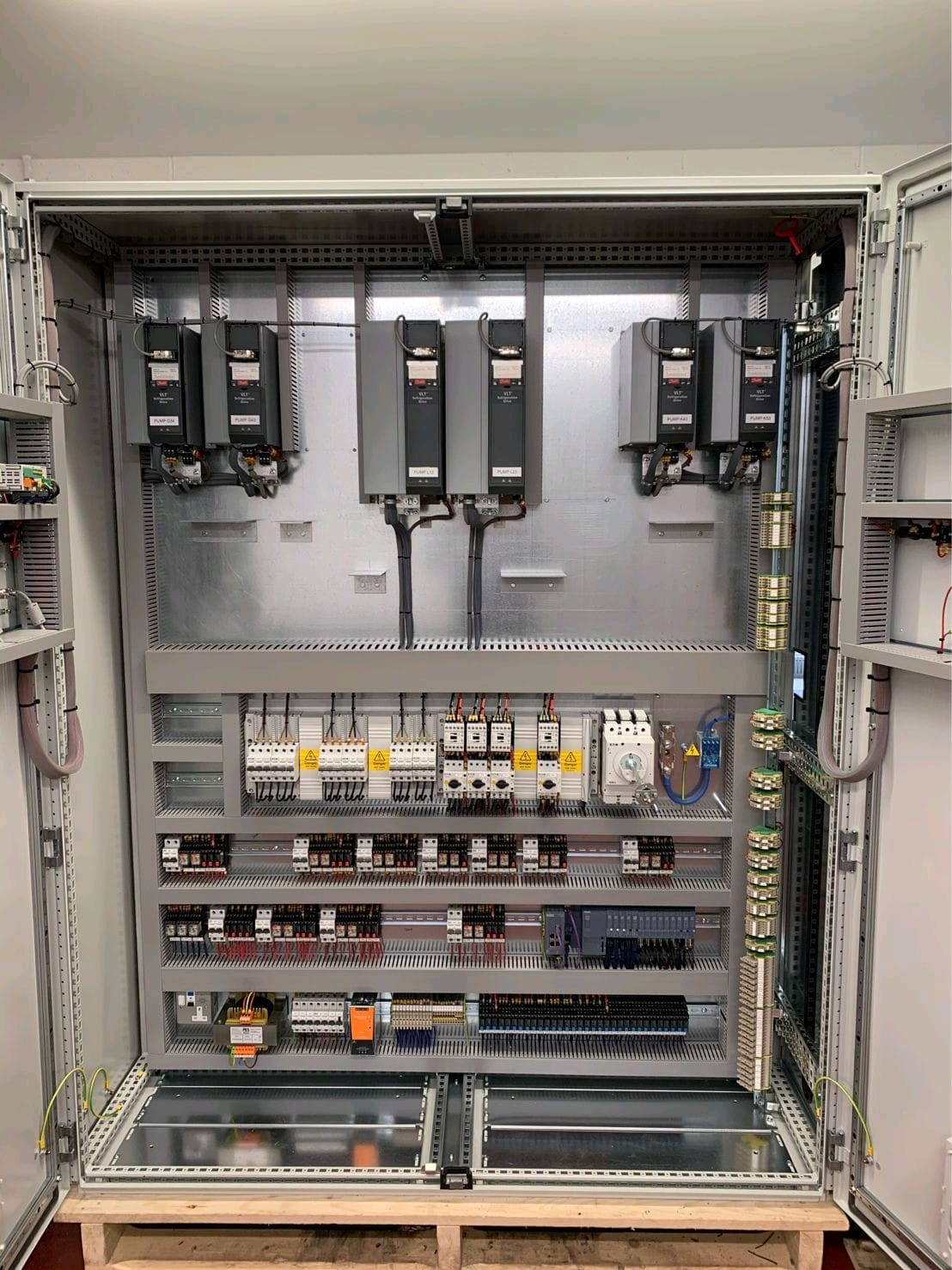
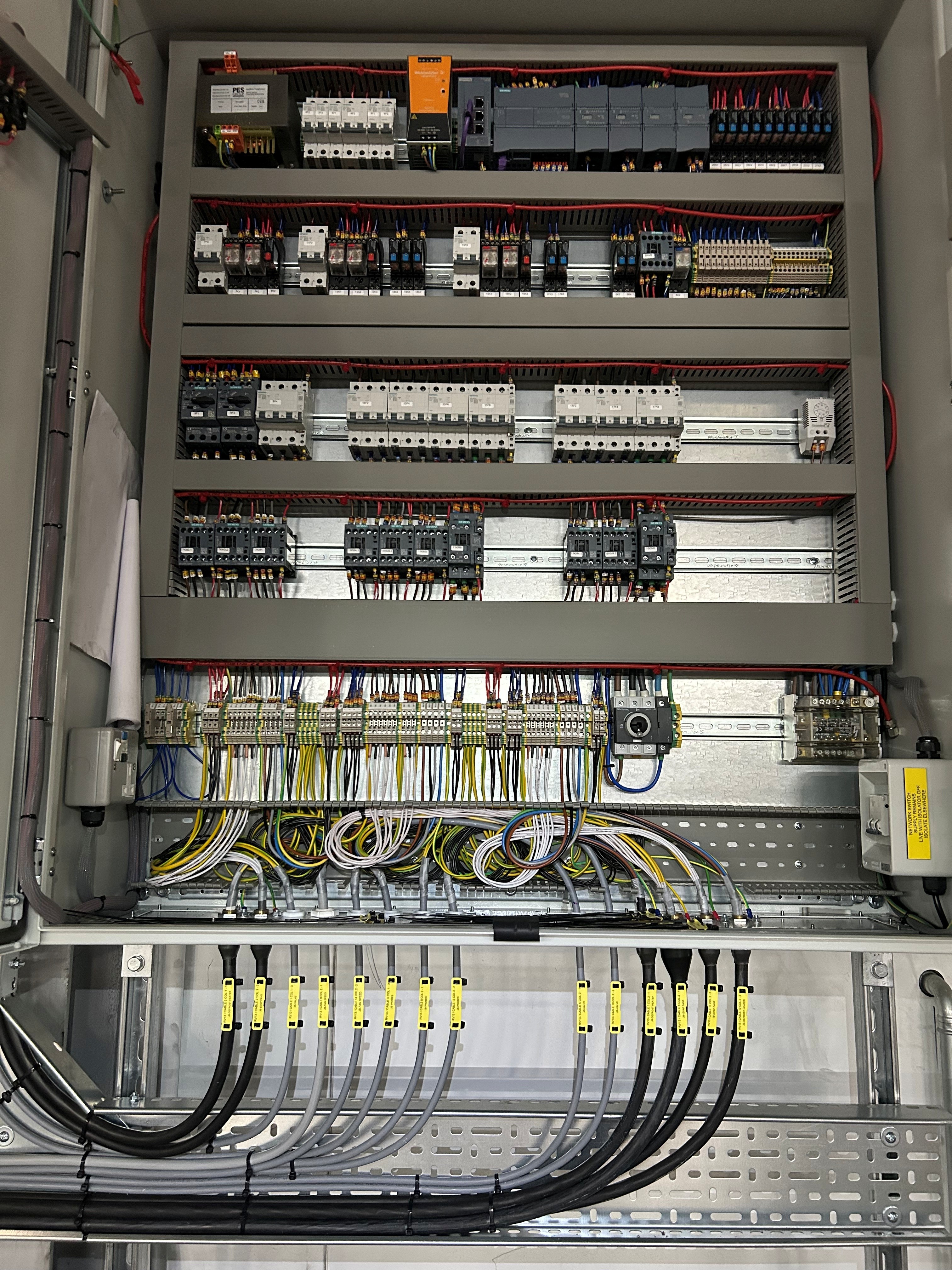
Managing critical MRO spares across multiple industrial sites is not a procurement challenge - it is an infrastructure risk problem. The gap between what the inventory system says you hold and what will actually restore production after a control panel or drive failure is where extended downtime begins.
For operations directors responsible for electrical and control systems across several facilities, that gap compounds silently. Undocumented equipment changes, inconsistent site records, and untracked component obsolescence accumulate until a failure makes the exposure visible - at exactly the moment you can least afford it.
Why MRO Spares Management Breaks Down Across Multiple Sites
The breakdown rarely starts with a bad decision. It starts with growth. A site adds a new production line, swaps a failing drive for a compatible alternative, or upgrades a PLC mid-contract - and nobody updates the spares register. Multiply that pattern across five or ten sites over several years and the inventory list becomes a record of what was installed, not what is currently running.
Three failure modes repeat across multi-site operations:
Inconsistent site records - equipment changes made during reactive repairs are never captured in the central asset register, so spares held reference the original specification, not the installed reality.
Duplicated stock - low-risk, easily available components are held at every site while genuine single points of failure - bespoke control panel assemblies, specific PLC I/O modules, long-lead drives - go uncovered.
Undocumented equipment changes - a spare component arrives on site and appears compatible, but the control logic, firmware version, or parameter set no longer matches. The restoration fails. Downtime extends.
The Hidden Risk in Undocumented Changes
A spare PLC module held in good faith against a 2019 specification will not restore a line that was quietly upgraded in 2022. Without accurate documentation of every equipment change, inventory decisions are based on outdated assumptions - and failures confirm that gap at the worst possible time.
In-house maintenance teams rarely have the bandwidth to audit spares registers against installed equipment across multiple sites on a scheduled basis. The task gets deferred until a failure forces it. By then, the cost of that oversight is already being paid.
The Real Cost of Reactive Emergency Procurement
Emergency procurement for industrial electrical components is not simply expensive - it is often structurally slow. Standard procurement channels are not configured for urgency. Specialist distributors for Siemens, Allen-Bradley, or RDM PLC platforms hold stock in normal volumes, not emergency volumes. When a site needs a specific I/O card or variable speed drive that is already moving toward end-of-life, the lead time extends from hours to days - sometimes weeks.
The financial case for a managed critical spares contract must be built on this reality. Calculate the cost of production downtime per hour for your highest-throughput lines. Then calculate the realistic procurement and restoration timeline for your three most critical electrical components - not the best case, but the documented worst case including shipping, compatibility verification, and recommissioning. That number, set against the annual cost of a structured spares programme, is the investment case.
Illustrative Scenario: Allen-Bradley CompactLogix PLC — Analogue Input Module Failure
Illustrative example based on representative JBB project work. Consider a food manufacturing facility running a chilled production line controlled by an Allen-Bradley CompactLogix PLC. The PLC's analogue input module fails during a production shift. A replacement appears to be held on-site — but it was purchased three years earlier against a different firmware baseline. The module installs but does not communicate correctly with the current control logic. The site now needs the correct module sourced, the configuration backup retrieved and verified, and a qualified engineer to recommission the system. Without a current configuration backup held centrally and a confirmed-compatible spare, the restoration timeline extends from under two hours to a multi-day outage. The operational consequence — lost production, potential cold chain disruption, and expedited procurement cost — substantially exceeds what a managed spares programme would cost across a full year.
Linking Your Spares Strategy to Asset Lifecycle and Control Panel Documentation
Asset lifecycle data and control panel documentation are the foundation of any credible spares strategy. Without them, inventory decisions are guesswork - and guesswork accumulates risk at exactly the components that matter most.
A spares programme built on current documentation knows: what is installed at each site, what firmware or software version each controller is running, what components have been changed since original commissioning, and which assemblies have no available alternative in the current market. Control panel documentation produced through design and manufacture processes - including schematic drawings, BOM revisions, and test records - provides the reference baseline. Where that documentation is absent or out of date, the first engineering task is to reconstruct it.
Lifecycle data adds the time dimension. A motor control centre assembly installed in 2015 is not in the same risk category as one installed in 2023. Knowing the installation date, the component specification, and the manufacturer's stated support horizon allows the programme to prioritise which spares require active management and which can remain on a standard replenishment cycle.
Documentation as a Strategic Asset
Facilities that maintain current as-built documentation for their control panels - including revision history and software version records - consistently recover from electrical failures faster than those operating from outdated or absent records. The documentation does not prevent the failure; it determines how long the failure lasts.
BS 7671 requires that electrical installations are properly certified and documented, and that records - including panel drawings, software records, and operational and machinery compliance documents - are updated following modifications. For facilities operating under regular inspection and testing regimes, maintaining accurate control panel documentation is not optional - it is a compliance requirement. A spares strategy built on that documentation baseline satisfies both operational and regulatory objectives simultaneously.
Tracking Component Obsolescence Before Manufacturers Withdraw Support
End-of-life PLC platforms and variable speed drives are the component category where reactive procurement fails most severely. Once a manufacturer formally withdraws support - whether for Siemens S7-300 series hardware, legacy Allen-Bradley SLC 500 modules, or older RDM refrigeration controllers - replacement components become scarce and expensive rapidly. Refurbished units appear on secondary markets at significant premium, with no manufacturer warranty and uncertain reliability.
Proactive obsolescence tracking requires three inputs: the manufacturer's published product lifecycle timeline, the current installed base across all sites, and a realistic assessment of how long the existing system needs to remain operational before a planned upgrade justifies the capital investment. Where that window is longer than the manufacturer's support horizon, holding confirmed-available spares before withdrawal is the only reliable mitigation.
Audit all installed PLC and drive hardware across sites, recording manufacturer, model, firmware version, and installation date.
Cross-reference against current manufacturer lifecycle status - active, mature, end-of-sale, or end-of-life - for each platform.
Identify components already past end-of-sale where replacement availability is already constrained.
Quantify how many of each end-of-life component are installed across the estate and what the failure exposure represents in production terms.
Determine whether the strategic response is controlled spares procurement, planned migration to a current platform, or both - and schedule accordingly.
This is not a one-time exercise. Manufacturer lifecycle decisions change, and new withdrawal announcements can move a component from 'active' to 'end-of-sale' within a single product cycle. A managed programme monitors these announcements continuously and triggers procurement decisions before market availability deteriorates.
How Centralised Configuration Backups Reduce Restoration Time When Spares Are Used
A spare PLC without its configuration backup does not restore production. This is the single most consistently underestimated element of critical spares planning - and the one that turns what should be a one-shift recovery into a multi-day engineering project.
Configuration backups must be held centrally, version-controlled, and matched to the specific hardware profile of each installed unit. When a module is replaced, the backup loaded must correspond to the firmware version of the replacement hardware, the current I/O mapping, and the parameter set in use at the time of failure - not the original commissioning state if changes have been made since. Where PLC programming covers Siemens, Allen-Bradley, and RDM platforms across different sites, each platform requires its own backup protocol and verification procedure.
Commissioning checklists serve a complementary function. When an engineer arrives on site to install a replacement component under production pressure, a current commissioning checklist eliminates the risk of incorrect configuration, missed interlocks, or unsafe restart sequences. It also provides an auditable record of the restoration process - relevant both for insurance purposes and for any subsequent BS 7671 inspection.
Version Control for Configuration Backups
Every modification to a PLC programme or drive parameter set must trigger an updated backup stored centrally with a date stamp and change reference. A backup that is six months out of date will restore the hardware - but not the production process as it currently runs. Treat configuration backups with the same change-control discipline applied to any other critical engineering document.
What a Managed Critical Spares Contract Delivers That In-House Inventory Cannot
In-house spares management works at single-site scale when the asset base is stable and the team has dedicated capacity to maintain it. Across multiple sites with active equipment changes, evolving automation platforms, and accumulated documentation debt, it consistently underperforms - not because the team lacks competence, but because the task requires continuous specialist input that competing operational demands displace.
A managed critical spares contract - such as JBB Electrical's Critical Spares service - provides component lifecycle monitoring, obsolescence planning, and proactive replacement scheduling as a continuous managed function, not a periodic review. The distinction matters: periodic reviews catch problems after the window to act has already narrowed. Continuous monitoring catches them when options are still open.
The contract structure also addresses the capital efficiency argument. Centralised spares analysis identifies which components are genuinely critical - those with long lead times, single-site dependency, and no viable alternative - and separates them from components that appear on every site's register but are readily available through standard channels. Capital held against easily available components can be redirected to genuine risk coverage.
The JBB Critical MRO Spares Methodology
The JBB Critical MRO Spares Methodology
Assess
JBB Electrical conducts a structured audit of all installed electrical and control systems across each site - recording PLC platforms (Siemens, Allen-Bradley, RDM), drive specifications, control panel assemblies, and firmware versions - to establish an accurate baseline of what is installed versus what the current spares register assumes.
Modernise
Where asset documentation is absent or out of date, JBB's in-house manufacturing capability and EPLAN Electric P8 design tools are used to reconstruct accurate control panel schematics, update BOM records, and align commissioning checklists with the current installed state - giving the spares programme a defensible foundation.
Protect
Single points of failure across PLC modules, variable speed drives, and critical control panel assemblies are identified and matched against manufacturer lifecycle status - with confirmed-available spares procured for end-of-life or end-of-sale components before market availability deteriorates further.
Prevent
Centralised configuration backups for all PLC and automation software - including Siemens, Allen-Bradley, and RDM platforms - are version-controlled and linked to each physical spare, so restoration is a verified, repeatable process rather than an engineering improvisation under pressure.
Support
As a NICEIC-approved contractor founded in 1966, JBB provides ongoing obsolescence monitoring, proactive replacement scheduling, and immediate-response protocols - ensuring the managed spares programme adapts continuously as equipment changes, automation upgrades, and manufacturer lifecycle decisions alter the risk profile across the estate.
When the same team that designs, builds, tests, and documents a control system also holds responsibility for its spares strategy, the accountability gaps that arise from dividing those functions between separate contractors are eliminated. Your spares register reflects what is actually installed, your configuration backups match the current firmware state, and the engineering knowledge needed to verify a replacement is held by the same people who built the system.
The Managed Contract Advantage
A managed critical spares contract provides the continuous engineering attention that in-house teams cannot sustain across multiple sites alongside active operational responsibilities. Component lifecycle monitoring, obsolescence alerts, and configuration backup verification require specialist input on a frequency that competing maintenance and capital project demands routinely displace.
The operational consequence of that displacement is predictable. Emergency procurement at premium cost, extended restoration timelines, and failed restorations due to undocumented equipment changes are not random events - they are the measurable output of a spares strategy that has fallen behind the rate of change in the installed estate. A managed programme, backed by engineering expertise across control panel design and PLC software development, closes that gap systematically rather than waiting for failures to expose it.
Next Step: Request a Compliance & Breakdown Prevention Assessment
Next Step: Request a Compliance & Breakdown Prevention Assessment
A Compliance & Breakdown Prevention Assessment identifies the electrical, compliance, and breakdown risks affecting your operation, and sets out the engineering actions needed to reduce downtime, protect reliability, and keep your infrastructure defensibly compliant. Request a Compliance & Breakdown Prevention Assessment today to establish which critical MRO spares gaps represent your highest downtime risk across each site - and build the structured programme to close them.
Compliance & Breakdown Prevention Assessment