A mid-sized manufacturing site commissions its first structured critical spares assessment after twelve years of reactive procurement. The existing stores hold a substantial accumulated stock of spare parts. The assessment takes four weeks. When the report is delivered, the picture is not what the maintenance team expected. A meaningful proportion of the stock is for equipment that has been replaced or decommissioned over the twelve years without corresponding updates to the spares holding — drives for a line that was refitted, contactors for motor sizes the site no longer runs, control modules for a PLC family that was migrated years earlier. Another portion is genuine stock that matches current equipment but carries no configuration data, no calibration record, and no replacement procedure. The remainder is the critical gap: components currently installed, with no spare on site, with lead times between four and sixteen weeks, and with no prior recognition that they represented single points of failure.
The accumulated spares holding, on inspection, was roughly a third usable stock against the current installation, a third present-but-unrestorable without additional engineering work, and a third replaced by critical gaps the existing procurement had never surfaced. The shortfall was not a procurement failure. It was the predictable outcome of managing spares as a purchasing activity rather than as an engineering discipline. A structured critical spares programme is the work that closes that gap — and the work that keeps it closed as the installation changes.
What a Programme Does That Reactive Procurement Cannot
Reactive spares procurement responds to two triggers: a component fails and the replacement is bought, or a component is visibly ageing and a spare is bought to hedge against failure. Both triggers act on individual components in isolation, and both assume the baseline question — which components are critical — has already been answered correctly. On most sites it hasn't. The spares position accumulates through years of individual purchasing decisions made by different people under different pressures, and the holding that results reflects the site's procurement history, not its current engineering risk profile.
A structured programme starts from the installation and works outward. It asks what is installed, what would happen if each critical component failed, what the restoration path actually is — physical spare plus configuration data plus procedure plus verified bypass — and where the gaps sit. Then it acts on the gaps in priority order, using the site's own maintenance calendar to rotate the work through scheduled shutdowns rather than forcing additional downtime. The output is not a stock list. It is a documented engineering position the site can evidence under audit, use during breakdowns, and maintain as the installation changes over the years that follow.
📌 A stock list is not a spares position:
A stock list records what is on the shelf. A spares position records what would actually restore production on each critical panel. The first is a procurement document. The second is an engineering one. Sites that confuse the two hold expensive stock that does not match their failure risk, and the difference only surfaces when a critical component fails.
This is what the fourth-quarter procurement cycle cannot produce, regardless of budget. The question 'what should we stock?' produces a procurement answer. The question 'what would actually restore production on each critical panel?' produces an engineering answer. The programme is the mechanism that asks the second question systematically.
The Shape of the Work: What a Programme Actually Involves
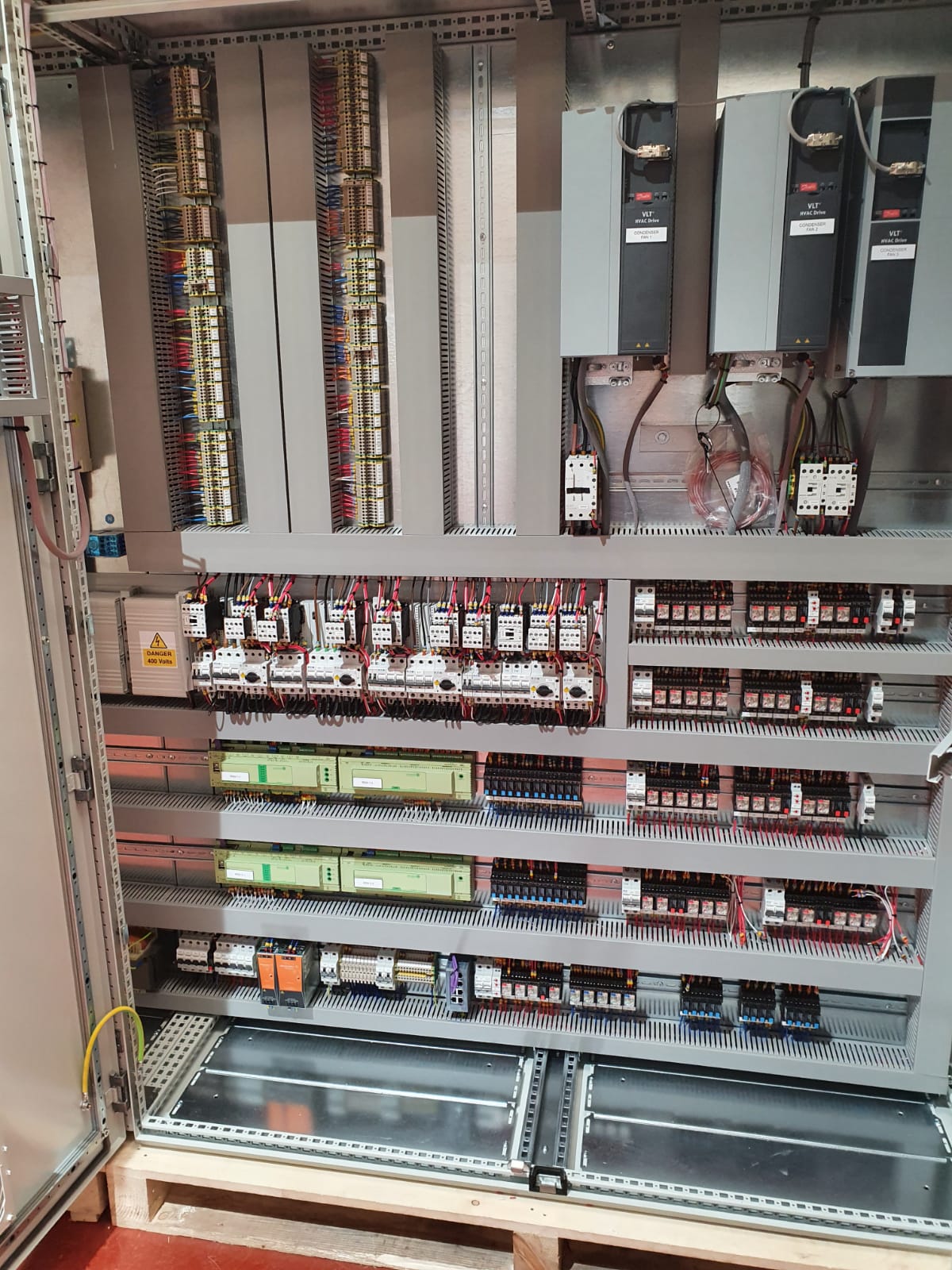
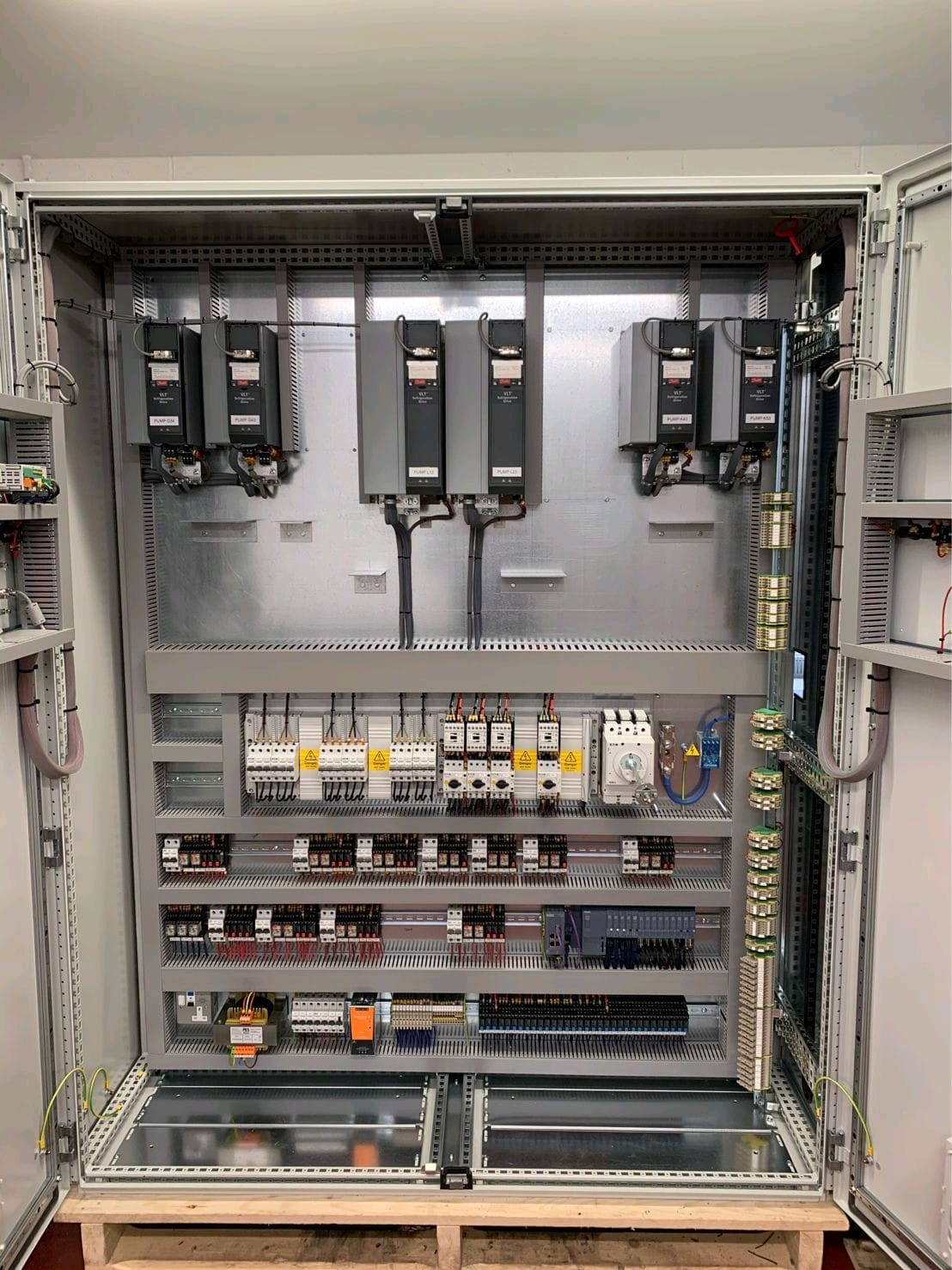
The engineering work at the start of a critical spares programme is largely documentation work, because the spares position cannot be assessed without knowing what is installed. Every critical control panel needs its current equipment captured — model numbers, firmware revisions, configuration data, and the as-built schematics that link them together. Where EPLAN drawings exist and match the installed state, they provide the reference. Where they don't, producing them is part of the assessment, because without accurate drawings the programme is being built on an inventory of what the site thinks is installed rather than what actually is.
From that baseline, each component is evaluated against the three criticality criteria — production halt on failure, no bypass available, lead time exceeding acceptable downtime — and the results are cross-referenced to the existing stock. The gap list emerges from the comparison.
The gap list typically resolves into three categories, each requiring different engineering attention:
- Components in the critical category with no spare on site — the first priority, because the failure mode is immediate and the lead time is the outage
- Components with a physical spare but no configuration backup — the second priority, because the spare is not yet a restorable spare and the gap is engineering rather than procurement
- Components held in stock but no longer matching the installed equipment — the third category, because they carry storage cost without carrying risk-reduction value, and the budget they represent is better redeployed against the real gaps
The supplier work sits alongside the engineering work rather than driving it. Lead times have to be confirmed with the actual suppliers rather than taken from catalogues, because the gap between a catalogue lead time and a real one — particularly for configured or calibrated components — can be the difference between a two-day outage and a two-week outage. Obsolescence status has to be verified per component against current manufacturer notices, because the spare the site bought four years ago may be for a platform that has since entered end-of-life status without the site's procurement process picking it up.
💡 What the first assessment usually finds:
Most sites with accumulated reactive stock discover three overlapping problems at the same time: spares for decommissioned equipment still held in stores, currently installed components with no spares position, and physical spares that cannot be restored without configuration data that was never captured. The programme's first job is to sort the three and redirect the budget from the first category to the third.
Integrating the Programme into Existing Maintenance
A critical spares programme fails if it sits alongside the site's existing maintenance operation as a separate workstream. It has to integrate into the rhythms the maintenance team already runs — the planned shutdowns, the thermal imaging surveys, the CMMS work orders, the audit cycles — so that the work of maintaining the spares position happens during activities that are already scheduled, rather than requiring its own calendar.
During planned shutdowns, the programme uses the access window to verify bypass procedures, inspect stored spares under test conditions, and update as-built schematics against any modifications made during the outage. Thermal imaging surveys feed the programme with condition data on the installed equipment — a hotspot on a contactor that has run for fourteen years isn't only a maintenance alert, it's an input to the decision about whether that contactor should be stocked as a spare against its remaining life. The CMMS carries the critical spares register as linked data against each critical panel, so a work order raised on the panel surfaces the register entry, the replacement procedure, and the configuration backup location without a separate lookup.
The audit cycle is where the programme's documentation work pays back. A register maintained continuously as engineering documentation — not reconstructed annually for audit preparation — answers inspector questions in minutes rather than days. The documentation the programme produces is the same documentation an insurance underwriter assessing business interruption exposure expects to see, and the same documentation a regulator in a regulated sector reviews during inspection. Produced once, it serves three audiences.
📖 CMMS (Computerised Maintenance Management System):
The software system that manages the site's work orders, asset records, and planned maintenance schedule. A critical spares programme integrates with the CMMS as linked data against each critical asset, so the register surfaces in the maintenance workflow rather than requiring a separate lookup during incidents.
What Obsolescence Looks Like Inside a Programme
Obsolescence handled reactively is a series of crises. Obsolescence handled inside a structured programme is a rolling set of engineering decisions made in advance of the supply pressure. Each critical component in the register carries its lifecycle status and the date it was last verified, and manufacturer end-of-life notices are treated as programme inputs rather than procurement emergencies. When a platform enters end-of-life, the decision is already defined: stock final quantities against the remaining installation life, qualify a compatible replacement with change-control documentation prepared, or schedule a controlled migration during a future planned shutdown.
Where migration is the chosen path, the programme connects directly to JBB's in-house manufacturing capability. A replacement panel can be designed against updated specification, built and tested at JBB's facility, and installed during a planned shutdown — so the obsolescence event is resolved as a controlled engineering project rather than an improvised response to a failure that forced the issue. This is the work the programme makes possible by establishing the obsolescence horizon well ahead of the forcing event.
🧪 An illustrative scenario — not a JBB case:
Consider a site three months into a structured critical spares programme. The assessment has produced the register, documented the gaps, and established the obsolescence horizon for each critical platform. A manufacturer notice arrives announcing end-of-support for a PLC family installed on two of the site's production lines. Because the programme already holds the lifecycle position for that platform, the response is not a scramble. The engineering team reviews the register, confirms the remaining operational life of each line, and schedules migration work for the next two planned shutdowns — six months and eighteen months out. The manufacturer notice becomes a scheduling input, not an incident.
JBB's Approach: Assess → Modernise → Protect → Prevent → Support
JBB delivers critical spares programmes as a standalone service and as the structural core of the Compliance & Breakdown Prevention Assessment. The methodology applies JBB's five-stage framework specifically to programme implementation and operation.
📋 JBB Critical Spares Programme Framework:
Assess — Capture the current installed state of every critical control panel, verify as-built schematics against the installation, reconcile existing spares holding to the equipment it is supposed to support. Modernise — Address end-of-life components first, with final-quantity purchase, qualified replacement, or scheduled migration built and installed in-house. Protect — Close the gap list in priority order, bring stored spares up to restorable condition with configuration data and replacement procedures. Prevent — Integrate the register with CMMS and maintenance calendar so programme maintenance happens during scheduled activity. Support — Retain technical data and configuration history within the JBB team that designed, built, and documented the panels.
During Assess, engineers capture the current installed state of every critical control panel, verify the as-built schematics against the installation, and reconcile the existing spares holding to the equipment it is supposed to support. Configuration data, calibration records, and firmware revisions are documented. EPLAN as-built schematics are produced where they don't already exist, because the programme cannot be built on drawings that don't reflect reality.
Modernise addresses components already at end-of-life first: final-quantity purchase, qualified replacement, or scheduled migration. Where migration is the path, JBB's in-house manufacturing capability means the replacement panel can be built to current specification and installed during a planned shutdown, rather than sourced and commissioned under breakdown pressure. Protect closes the gap list in priority order. Critical components with no spare are procured and stocked under correct conditions. Physical spares without configuration data receive the backup work that turns them into restorable spares. Storage conditions are corrected where inspection found them inadequate, and replacement procedures are written against each critical component while the engineering knowledge is live.
Prevent integrates the register with the site's CMMS and the maintenance calendar, so programme maintenance happens during scheduled activity rather than requiring separate attention. Lifecycle status is reviewed on a cycle matched to the manufacturer environment — typically annually, more frequently during periods of platform transition. Support preserves engineering continuity: the same JBB team that designs, builds, tests, and documents the panels holds the technical data afterwards. When a critical component needs replacing, the engineer on the phone is the one with access to the original schematics, the configuration history, and the programme register. JBB has been delivering this continuity of engineering responsibility to UK industrial sites since 1966, and the work is carried out by NICEIC-approved engineers to the standards the site's audit documentation is reviewed against.
Frequently Asked Questions
How long does a first critical spares programme assessment take?
For a single-site industrial installation with twenty to forty critical control panels, the initial assessment typically runs four to six weeks from first site visit to delivered register. Most of that time is documentation work — bringing the as-built schematics up to date, capturing configuration data, and reconciling the existing spares against the installed equipment. The larger and more modified the installation, the longer the baseline capture takes; the subsequent annual refresh is significantly quicker once the baseline is in place.
What does JBB hand over at the end of the assessment?
The critical spares register keyed to each critical panel, with specification, configuration data, replacement procedure, and lifecycle status against each entry; a prioritised gap list with the operational consequence of each gap left unaddressed; EPLAN-generated as-built schematics where they didn't previously exist; a storage condition report with any required corrective actions; and an integration plan that connects the register to the site's existing CMMS and maintenance calendar.
Does the programme replace our existing maintenance processes?
No. The programme integrates with the processes the site already runs — planned shutdowns, thermal imaging surveys, work order management, audit cycles. The engineering discipline sits on top of existing maintenance, not alongside it. The intent is that programme maintenance happens during activities already scheduled, so the ongoing load on the maintenance team is absorbed rather than added.
What happens when an actual failure occurs during the programme?
The register is designed to be usable during a breakdown. An engineer responding to a failure on a critical panel surfaces the register entry, the replacement procedure, and the configuration backup location without a separate lookup. Where JBB holds the original panel design data, the JBB engineer on the phone has access to the same information the site does, which shortens the restoration time further. The programme's purpose is to make the eventual failure a rapid repair rather than an extended outage.
Next Step: Request a Compliance & Breakdown Prevention Assessment
Most sites running accumulated spares stock are carrying a mixed position — usable stock alongside redundant stock alongside genuine critical gaps — and cannot see the distribution without a structured assessment. The cost of the unrecognised gap is only measured when a critical component fails with no spare, no configuration, or no procedure available to restore it. A Compliance & Breakdown Prevention Assessment produces the register, the gap list, and the programme that converts a procurement-driven spares position into an engineered one.
The assessment is carried out by the JBB engineering team — the same engineers who design, manufacture, and commission the panels they assess. EPLAN-generated as-built schematics are produced where they don't already exist, configuration data is captured, and the programme is structured to integrate with the site's existing maintenance calendar and CMMS rather than to operate as a separate workstream.
Request a Compliance & Breakdown Prevention Assessment today to establish a critical spares programme that operates as engineering discipline rather than emergency procurement, so that component failures become rapid repairs rather than extended outages.