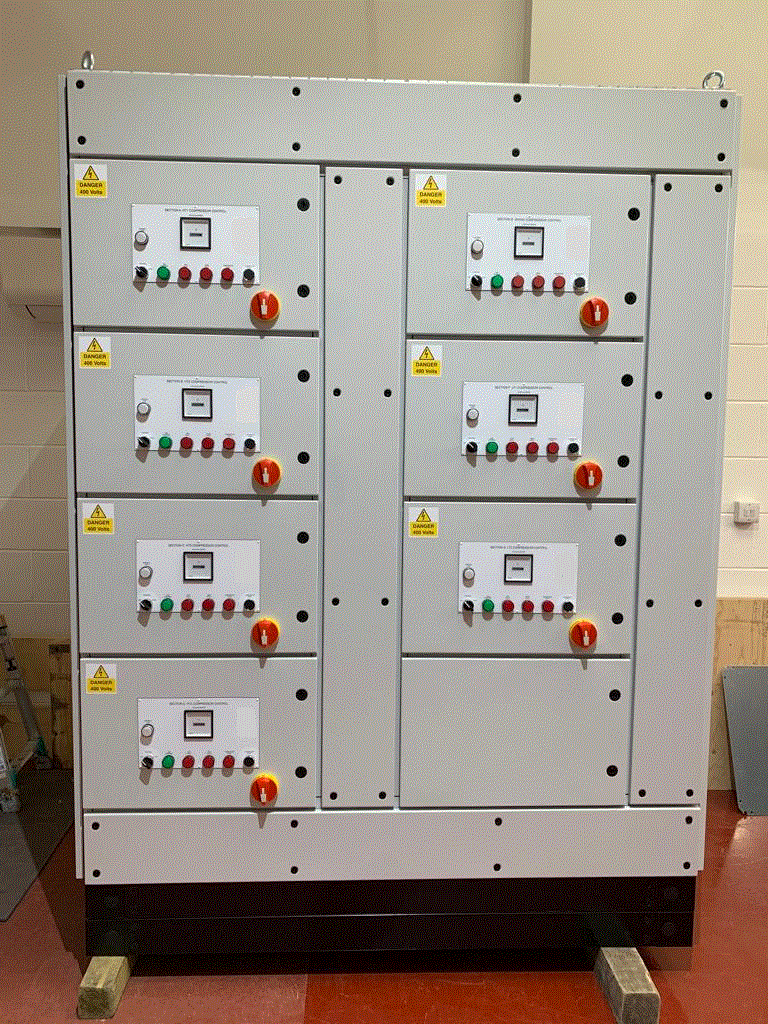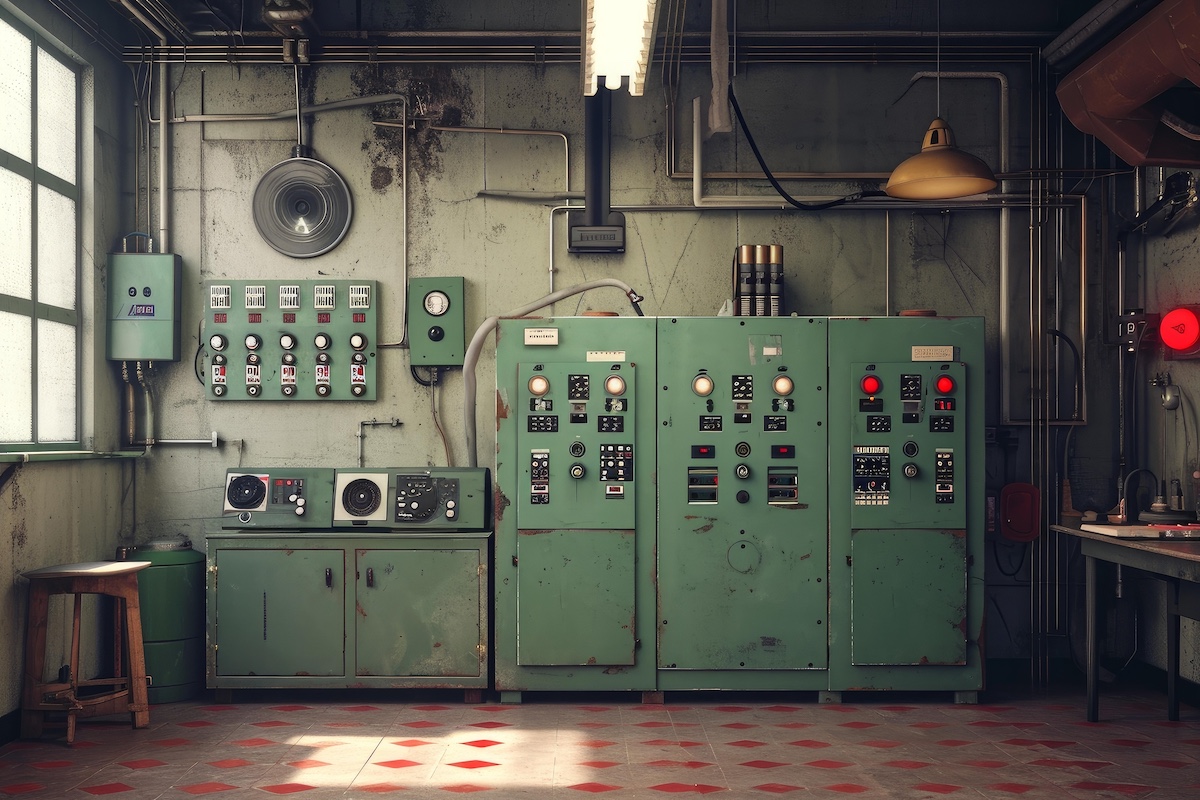
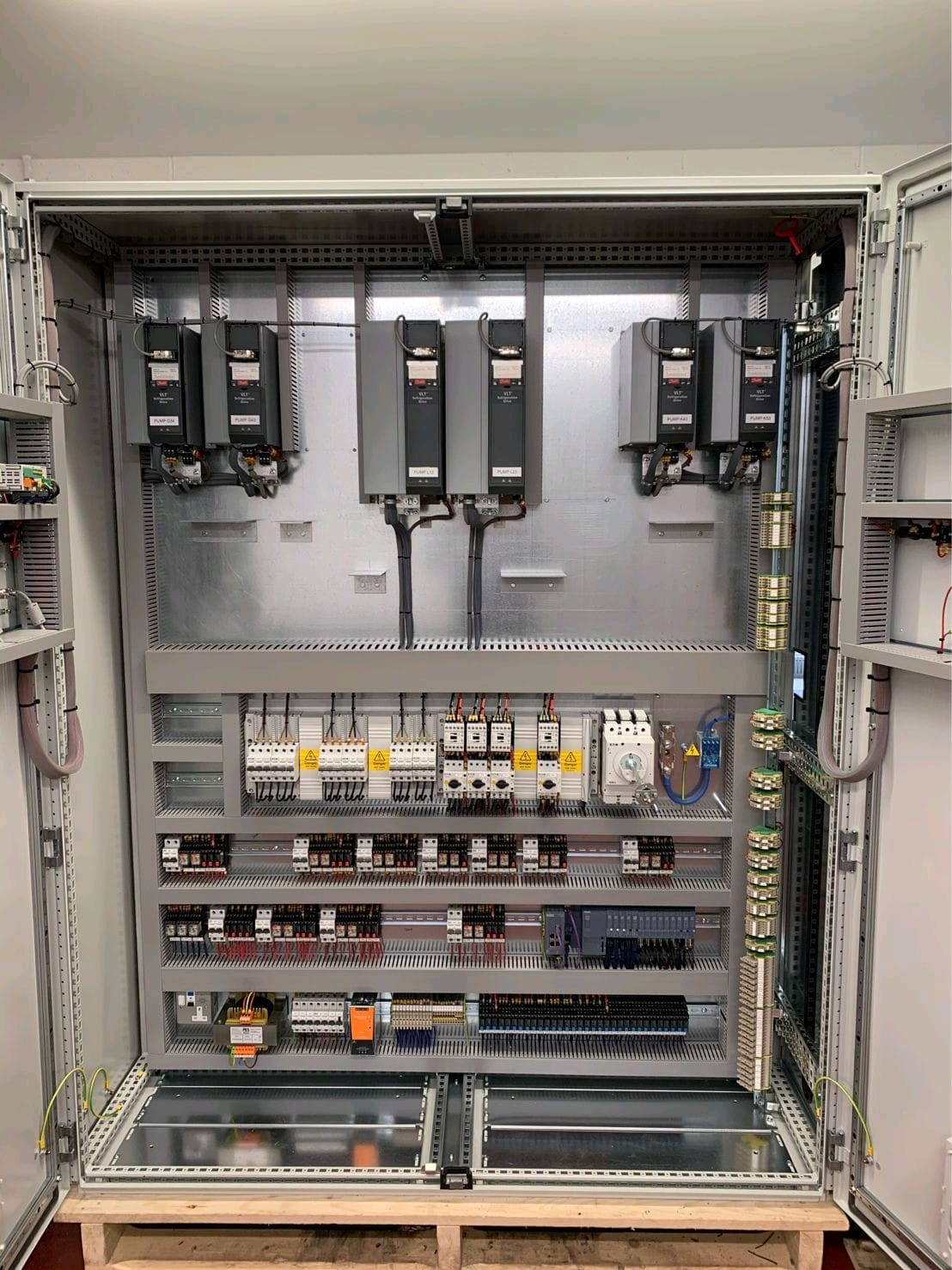
In industrial environments, control panels are one of the most underestimated contributors to downtime risk. Control panels are essential in manufacturing plants and other industrial settings, where they manage complex electrical systems and automation for various industrial processes. They sit quietly at the centre of production, refrigeration, and process control - distributing power, executing logic, managing alarms, and acting as the interface between operators and plant. Modern control panels are designed to enhance operational efficiency.
When control panels are outdated, poorly designed, or modified without engineering oversight, they introduce hidden risk. Failures may be infrequent, but when they occur, recovery is slow, uncertain, and disruptive. Modern control panels are designed specifically to reduce this risk by improving reliability, fault containment, maintainability, and compliance across the full lifecycle. These panels support advanced automation and control of industrial processes.
💡 Key Insight: Uptime is not protected by preventing every fault. It is protected by ensuring faults are predictable, contained, and recoverable under pressure.
Why control panels are central to uptime performance
Every automated system relies on its control panel to function correctly. Control panels manage a wide range of electrical equipment, from motors to sensors. When a motor stops, a refrigeration system trips, or a process alarms, the root cause often traces back to panel-level issues rather than the field device itself.
Control panels influence uptime in three critical dimensions:
How often faults occur (component stress, heat, poor protection)
How far faults propagate (segregation, selectivity, single points of failure)
How quickly recovery happens (diagnostics, access, documentation)
Modern panels address all three by design, rather than relying on reactive maintenance. Maintenance teams play a crucial role in implementing routine and proactive maintenance strategies to ensure continuous uptime.
⚠ Reality check: Many “equipment failures” are actually panel design or documentation failures revealed under load.
Common control panel failure modes that drive downtime
Before understanding how modern control panels improve uptime, it is important to recognise the most common ways older or poorly engineered panels fail. Legacy systems often lack the advanced features needed to prevent critical failure, leading to unexpected shutdowns and operational disruptions, and can drive up maintenance costs due to obsolete parts and emergency repairs. Adopting cost-effective modernisation strategies can help mitigate these risks and improve overall system reliability.
Thermal overload and heat stress
Excess heat accelerates component ageing, weakens terminations, and causes nuisance trips. Panels built without thermal calculations often run close to their limits from day one, especially when control panel enclosures are undersized or arranged in ways that trap heat.
Key steps to avoid thermal overload include:
Accurate calculation of total heat load
Proper enclosure sizing and layout
Ventilation or cooling systems where required
Use of fans and fan accessories to prevent hot spots
A panel that operates comfortably within its thermal limits maintains reliability margin for abnormal conditions. Proper thermal management also extends the service life of panel components, ensuring long-term durability, sustained value, and better equipment lifespan.
Poor protection coordination
Incorrectly selected or coordinated protective devices allow minor downstream faults to trip upstream supplies. Circuit breakers are essential for protecting against short circuits, electrical overloads, and other electrical hazards, helping prevent damage to circuits and equipment while supporting fault isolation.
This turns a local issue into a site-wide outage.
Modern control panels improve uptime by:
Using properly rated circuit breakers and fuses to isolate faults and maintain stable power distribution
Ensuring selective coordination so only the affected circuit is disconnected
Inclusion of surge protection devices to safeguard sensitive equipment from voltage spikes.
Adherence to current safety standards is critical for ensuring proper protection and compliance.
Undocumented modifications
Panels that have been altered over the years without drawing updates become unpredictable. Engineers lose confidence in isolation points, fault tracing, and restart sequences. Undocumented modifications can lead to non-compliance with regulatory requirements, making it difficult to ensure compliance during audits or inspections.
Obsolete or unsupported components
When a failed component cannot be sourced quickly, downtime becomes a supply-chain problem rather than an engineering one. Timely repairs and proper installation of replacement parts are essential to minimise downtime and restore system functionality.
🚫 Common mistake: Assuming that because a panel has “always worked”, it will continue to do so under increased load, age, or regulatory scrutiny.
Control panels as single points of failure
In many industrial environments, control panels quietly evolve into single points of failure without anyone deliberately designing them that way. As a centralised location for control functions and connected devices, the panel tends to absorb more responsibility over time. Additional loads are added, control functions are extended, field devices are upgraded, and production expectations increase, yet the original panel architecture often remains unchanged. Electrical panels must be designed with robust control components and reliable power supply to prevent single points of failure. Over time, what was once a reasonably resilient design becomes a concentration of risk.
This risk is rarely obvious during normal operation. The system may run reliably for months or even years, reinforcing a false sense of security, especially where the underlying industrial control panel architecture has not been reviewed as loads and processes evolve. The vulnerability only becomes visible when something abnormal happens: a short circuit, a control supply dip, a failed contactor coil, or a nuisance earth fault. At that moment, the panel’s design determines whether the event is contained or whether it escalates into a full system outage, often affecting the wider control system beyond the enclosure itself.
From an uptime perspective, this distinction is critical. The difference between a ten-minute interruption and a multi-hour outage is often not the severity of the fault, but whether the control panel preserves enough functionality for controlled recovery. Modern panels are designed to fail in predictable, limited ways, rather than collapsing as a single unit.
What defines a modern control panel?
Modern industrial control panels are not defined by appearance or age. They are defined by how well they support continuous operation, safe maintenance, and predictable recovery, reflecting industrial control panel design and compliance principles rather than just component lists.
Reliability-first electrical architecture
Engineered thermal management
Fault containment and selectivity
Clear isolation and access for maintenance
Integrated diagnostics and alarms
Accurate, controlled documentation
Lifecycle supportability
Industrial control systems for advanced automation and safety
Secure access features, including locks and keys, to restrict unauthorised entry
Built through a defined design process, not simply assembled from parts
Modern panels may also incorporate digital twin technology for real-time monitoring and edge computing to achieve faster response times for critical functions.
Definition: A modern control panel reduces both the probability of failure and the operational impact when failure occurs.
How modern control panels improve uptime in practice
1) Thermal engineering protects component life
Heat is one of the primary drivers of electrical failure. Modern control panels are designed using calculated heat loads rather than assumptions, with thermal design accounting for internal components as well as overall heat load.
Heat dissipation calculations at design stage
Component spacing to avoid hot spots
Ventilation or cooling where required, especially around soft starters
Allowance for future expansion
❗ Important: A panel that operates comfortably within its thermal limits maintains reliability margin for abnormal conditions.
2) Fault containment limits downtime spread
Modern panels are designed so that faults are isolated at the lowest practical level. This prevents minor failures from escalating.
Selective coordination between protective devices
Segregated supplies for power, control, and monitoring
Reduced single points of failure
Defined fault zones aligned to operational priorities
🧪 Example: A failed motor starter trips locally, while PLC power, HMIs, and monitoring remain live - allowing controlled restart rather than a full system reset.
3) Maintainability is designed, not improvised
When downtime occurs, engineers need to work safely and quickly. Modern panels are designed to support this reality, with proper wiring treated as part of maintainability by design.
Clear and durable labelling aligned with drawings
Accessible terminals and test points, with terminal blocks used to keep connections organised and serviceable
Logical grouping of circuits, with cable sizing considered where it affects safety and maintainability
Defined isolation strategies for partial shutdown
Careful planning and proper installation to ensure maintainability and safety during interventions.
ℹ Design principle: If a panel cannot be worked on safely under pressure, it will extend downtime regardless of component quality.
Relevant JBB service: Control Panels
4) Integrated diagnostics reduce recovery time
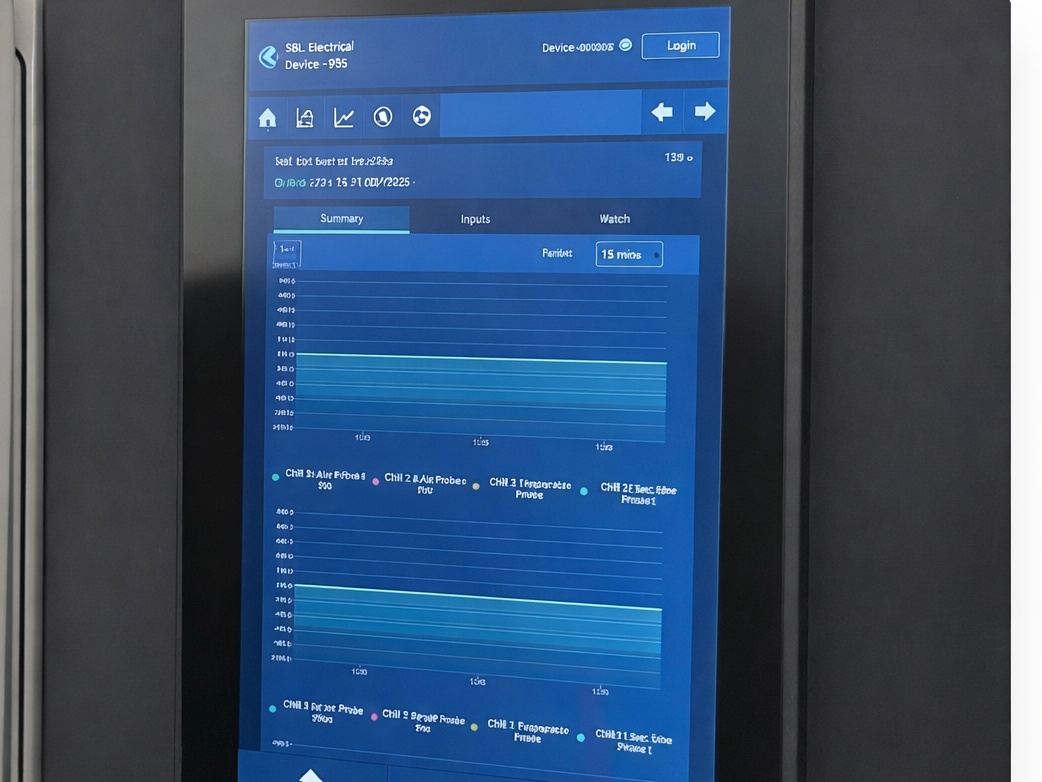
Modern control panels work hand-in-hand with a programmable logic controller and HMIs to provide meaningful diagnostics. PLC logic responds to input conditions and can communicate faults clearly to operators.
Context-rich fault messages
Device-level and system-level status indication
Alarm prioritisation to avoid overload
Fault history and trend data
Integration of sensors for real-time data collection and predictive maintenance, including variables such as motor speed, while PLCs can also share status with other devices to speed diagnosis.
✅ Outcome: Engineers spend less time guessing and more time fixing the actual fault.
The hidden cost of slow fault-finding
When organisations talk about downtime, they often focus on how often failures occur. In practice, however, the greater cost is frequently driven by how long it takes to identify and resolve faults once they happen. Control panels play a decisive role in this recovery phase.
In older panels, fault-finding is often a manual, linear process. Engineers isolate sections one by one, trace wiring physically, and test assumptions against drawings that may or may not reflect reality. This approach is slow, especially under production pressure, and faster diagnosis reflects a proactive approach to reducing recovery delays before faults escalate. Each action carries risk, particularly when isolation points are unclear or poorly labelled. As time passes, the cost of downtime escalates, not just in lost output but in disrupted schedules, wasted materials, and management intervention. Unplanned downtime and emergency repairs can significantly increase costs for businesses operating in industrial environments.
From a business perspective, the benefit is cumulative. Even if fault frequency remains unchanged, reducing recovery time by minutes or hours across multiple incidents per year delivers a measurable improvement in uptime, which is reinforced by disciplined preventive electrical maintenance programmes.
Compliance as an uptime enabler
Compliance is often seen as an administrative burden, but in reality, it reinforces good engineering discipline. Panels that fail audits or inspections often fail operationally as well, because the same weaknesses that create compliance gaps also create uptime risk, particularly when BS EN 61439 control panel compliance and maintenance is treated as a one-off exercise instead of an ongoing discipline. Adherence to the National Electrical Code and current requirements is essential to mitigate safety risks and ensure both compliance and operational reliability.
Where panels are poorly labelled, drawings are outdated, or protective devices are incorrectly specified, you do not just face an audit problem - you face a maintenance problem. Engineers cannot isolate safely, fault-finding becomes uncertain, and recovery is slow.
Electrical safety and standards
Modern control panels are designed and built in line with applicable industrial standards and site requirements. Adherence to safety standards is critical in industrial automation, and proper installation is required for compliance, with these requirements often shaped or enforced by regulatory bodies. This influences device selection, protection strategy, conductor sizing so wiring choices suit both safety and the panel’s operating voltage levels, identification, testing, and certification. The practical benefit is fewer unknowns and fewer unsafe workarounds during breakdowns, because the installed system behaves as documented.
Documentation integrity
Accurate as-built documentation is essential for reliable operation. When drawings reflect reality, engineers can fault-find confidently and safely. When they do not, isolation becomes guesswork and the risk of accidental shutdown or incorrect reinstatement increases.
Modern Control Panel Documentation Set
✅ Single line diagrams and protection schedules
✅ Panel layout drawings and schematics
✅ I/O lists and network architecture
✅ Test and inspection records
✅ Change history and revision control
Lifecycle risk and why “working today” is not enough
One of the most dangerous assumptions in industrial operations is that a control panel that works today will continue to work tomorrow under the same risk profile. In reality, control panels age in ways that are not always visible. Components become thermally stressed, manufacturers discontinue product lines, software platforms fall out of support, and undocumented changes accumulate.
This creates lifecycle risk. The panel may continue to function, but its ability to recover from failure degrades over time. Replacement parts become difficult to source. Engineers with system knowledge leave the organisation. Documentation no longer reflects the installed condition. When a failure finally occurs, the response is slower, more expensive, and more disruptive than expected.
Modern control panels are designed with lifecycle risk in mind. Upgrading legacy control panels is essential to extend service life, meet current operational demands, and improve reliability, especially once you can identify end-of-life control panels before they fail in service. Components are selected for availability and long-term support to help improve efficiency over the panel’s service life, with lifecycle support also depending on integrating components that can be maintained and replaced without redesigning the whole panel.
Preventive strategies that protect control panel uptime
Even a well-designed panel needs ongoing care. Modern uptime strategies focus on prevention rather than reaction, because most panel failures show early warning signs if you look in the right places and act on what you find. Preventive maintenance (PM) is the regular and routine maintenance of equipment to keep it running and prevent costly unplanned downtime. Routine maintenance, predictive maintenance, and proactive maintenance are all essential strategies for reducing downtime, controlling maintenance costs, and improving energy efficiency.
Preventive maintenance can help improve the lifespan of equipment, reduce costs by scheduling repairs or part replacements at suitable times, and provide environmental benefits by reducing energy consumption. Preventive maintenance tasks should ideally be performed on all items of equipment to prevent age-related failure.
Condition-led inspections
Thermal imaging and structured visual inspections, including checks for physical damage to wiring and terminations, identify loose terminations, overloaded devices, and degrading components before they fail. Regular inspections are important to pick up on potential hazards or wear and tear before they cause an incident. These programmes are far more effective when panels are designed for access and when findings are tracked through to close-out, rather than recorded as an isolated report. Systems can also identify early warning signs of failure, such as abnormal vibrations or heat, allowing for planned repairs and supporting longer panel life span where condition-led findings are corrected early.
Relevant JBB service: Preventive Maintenance
Critical spares planning
Modern panels use supportable components and are backed by documented spares strategies. This does not mean stocking everything. It means identifying what would stop production or refrigeration, understanding lead-times, and ensuring the site has a realistic recovery plan for the most critical failures.
⚠ Downtime risk: A single unsupported component can extend downtime from minutes to days - even when the fault itself is simple.
Planned modernisation
Rather than waiting for failure, modern sites plan upgrades to remove obsolescence, capacity limits, and undocumented modifications. Careful planning, combined with modular and scalable design in modern panels, allows for faster upgrades and easier replacement of faulty parts, following structured methods to specify and modernise industrial control panels.
Structured Control Panel Modernisation
Assess: condition, compliance, and lifecycle risk
Prioritise: panels with highest downtime impact
Design: for reliability and future capacity
Build & test: off-site where possible
Engineers can test changes in a virtual environment before physical implementation to minimise downtime risks.
Commission: with documented verification
Engineers can also download programs and debug systems remotely, reducing the need for physical site visits.
Where JBB adds value
JBB Electrical designs, builds, and supports modern control panels and MCCs for industrial and temperature-critical environments. JBB serves a wide range of industrial equipment, commercial buildings, and lighting systems, ensuring reliable operation across diverse applications. The focus is long-term uptime, compliance, and maintainability - not just making the panel function on day one.
In practice, this means engineering control panels as reliability systems: designed for fault containment, clear diagnostics, safe isolation, and documentation integrity that allows engineers to act quickly and confidently when something goes wrong.
JBB Method: Assess → Modernise → Protect → Prevent → Support
Assess: identify risk, condition, and documentation gaps
Modernise: upgrade panel architecture and obsolete equipment
Protect: improve fault containment and diagnostics
Prevent: embed condition-led maintenance and spares planning
Support: provide ongoing engineering support to keep systems audit-ready and reliable
Relevant JBB services: Electrical Installations | PLC Software
Book a Compliance & Breakdown Prevention Assessment
If your operation depends on uptime, your control panels should be engineered accordingly. JBB’s Compliance & Breakdown Prevention Assessment identifies weaknesses that increase downtime risk - including thermal stress, poor protection coordination, documentation gaps, obsolescence, and preventable single points of failure.
Request a Compliance & Breakdown Prevention Assessment to get a clear, engineering-led plan to improve control panel reliability, shorten fault recovery time, and protect site-wide uptime.
FAQs: How modern control panels improve uptime
What risks does this issue create?
Outdated or poorly engineered control panels increase fault frequency, extend recovery time, and allow local failures to escalate into wider outages. They also raise safety risk because unclear isolation, weak labelling, and outdated documentation can lead to unsafe intervention and incorrect reinstatement under pressure.
How does compliance affect this?
Compliance drives engineering discipline - correct protection, safe design, proper identification, and verified inspection and testing. Panels that meet compliance expectations tend to be clearer, safer, and easier to maintain. This reduces uncertainty during breakdowns and shortens fault-finding time, which directly improves uptime.
What preventive measures should be taken?
The most effective measures are condition-led inspections (including thermal imaging), documented critical spares planning based on lead-times, and planned modernisation to remove obsolete components and undocumented modifications. Preventive work is most valuable when findings are prioritised, corrected, and evidenced, rather than recorded without close-out.