Choosing the wrong installers of refrigeration systems does not reveal itself at handover. It reveals itself six months later, when a temperature excursion triggers a product loss event, a thermal imaging survey finds untested cable connections inside the motor control centre, or a regulatory audit exposes missing BS 7671 compliance certificates.
The procurement decision is the risk decision. And most procurement processes are not asking the questions that would surface the capability gaps before the contract is signed.
This guide gives industrial decision-makers the technical questions, documentation expectations, and red-flag indicators needed to distinguish a genuinely capable refrigeration contractor from one who will create compliance problems, unreliable systems, and expensive remediation after handover.
Why Refrigeration Installation Demands Both Mechanical and Electrical Control Competency
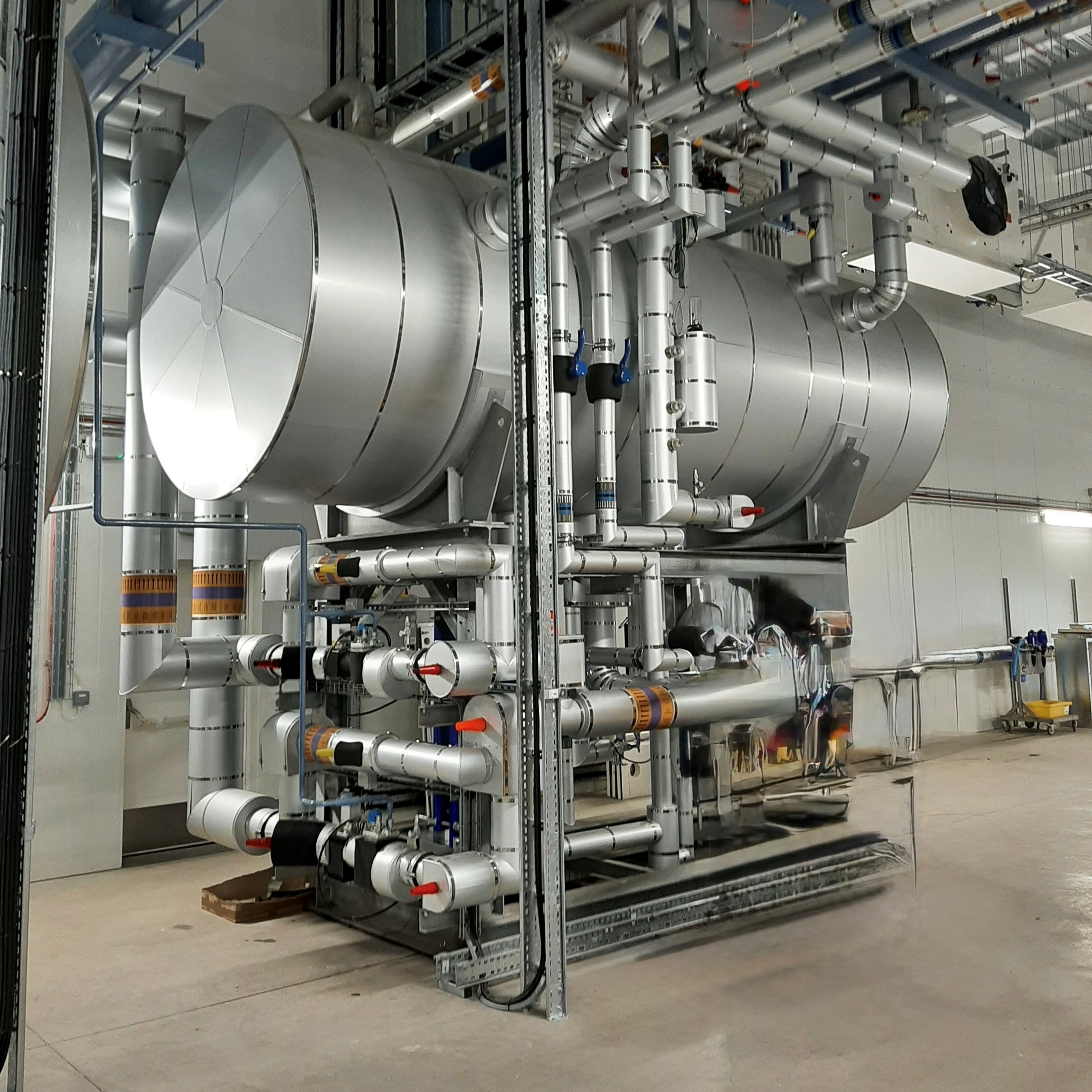
Mechanical refrigeration competency - pipework, refrigerant handling, compressor installation - is necessary but not sufficient for industrial sites. The reliability of a refrigeration system on a manufacturing or food processing facility is determined as much by the quality of the control system as by the quality of the refrigeration equipment itself.
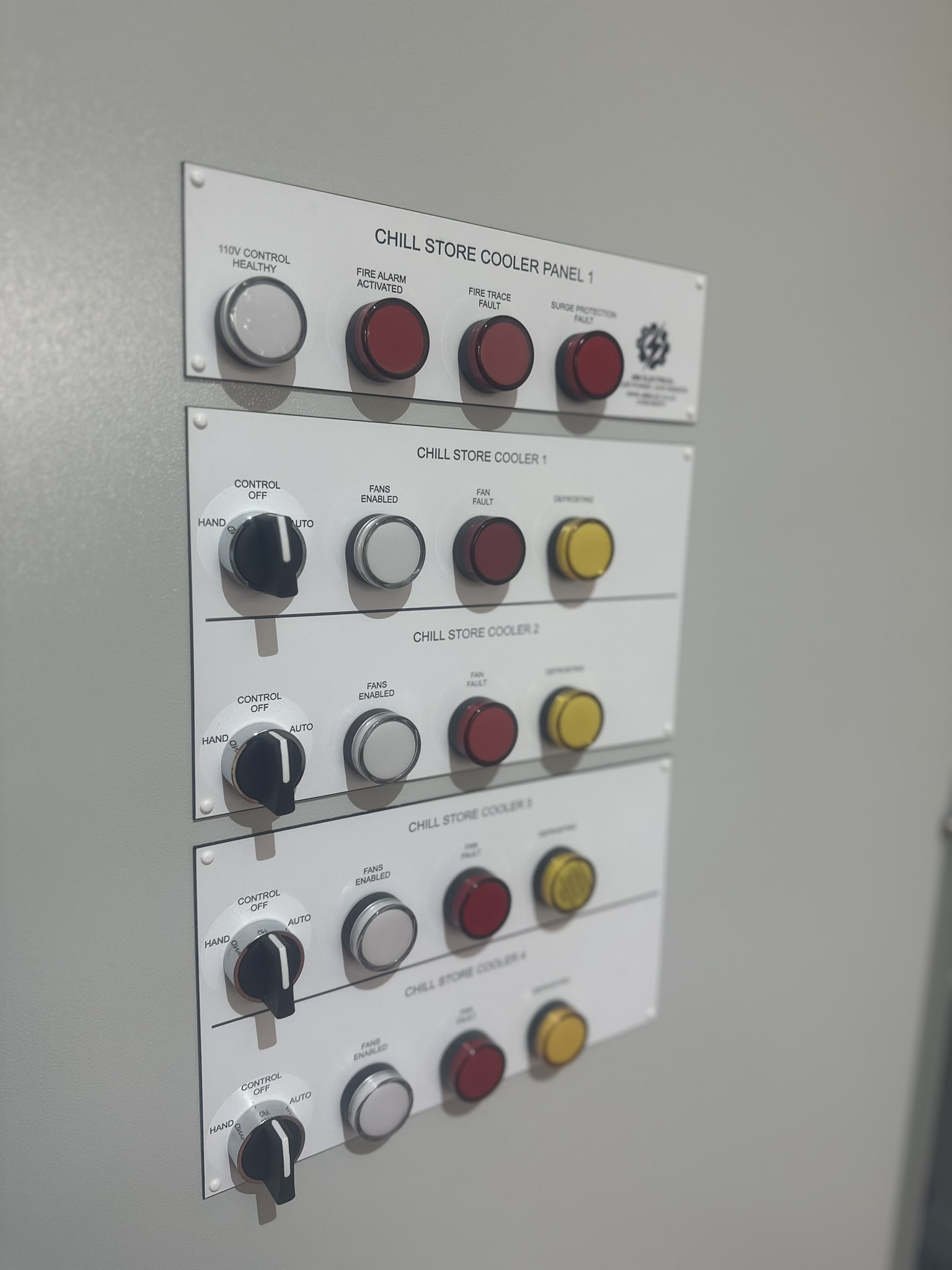
Refrigeration Control Systems integrate motor control centres, PLC logic, temperature sensors, alarm management, and SCADA oversight into a working system. When these elements are poorly designed, incorrectly commissioned, or incompletely tested, the refrigeration plant runs - but unreliably. Alarms go unacknowledged. Setpoints drift. Faults that would have been caught by correctly configured interlocks instead damage compressors or cause temperature excursions.
The Integration Risk of Split Scopes
Splitting mechanical refrigeration and electrical control scopes between separate contractors creates a predictable accountability gap. When a fault occurs at the interface between the refrigeration plant and the control panel, neither contractor accepts responsibility. Incompatible systems, undocumented modifications, and no single point of accountability are the typical outcome. A single contractor with end-to-end capability across Control Panels & MCC Design, PLC programming, and refrigeration controls eliminates this risk at source.
BS EN 60204-1 governs the electrical equipment of machinery - including the control panels and wiring associated with refrigeration plant. BS 7671 governs the electrical installation as a whole. A contractor who understands the refrigeration pipework but cannot demonstrate compliance with either standard creates a site that passes mechanical inspection but fails electrical audit.
The question is not whether your installer can handle refrigeration. The question is whether they can handle the whole system.
The Right Questions to Ask About Control Panel Design, PLC Capability, and SCADA Integration
Most tender documents ask for method statements and programme schedules. Few ask the questions that distinguish a contractor with genuine control systems capability from one who plans to subcontract the hard parts.
Ask these questions directly, in writing, before shortlisting:
- Who designs and manufactures your control panels - in-house or subcontracted? Can you demonstrate in-house manufacturing capability?
- Which PLC platforms do you program? Name them. Do you hold named engineers with platform-specific qualifications for Siemens, Allen-Bradley, or the platform your site uses?
- Can you provide a sample schematic from a comparable refrigeration project - motor control centre layout, protection scheme, and control wiring?
- How do you integrate SCADA or HMI into the refrigeration control system? Who writes the HMI logic - your engineers or a third party?
- What testing protocols do you apply to control panels before installation - functional testing, insulation resistance, protection relay verification?
- Do you design and configure alarm management logic within the PLC, or is alarm handling managed by the SCADA vendor separately?
A contractor with genuine PLC & Software Development capability will answer these questions fluently and with specifics. A contractor planning to subcontract the control systems will give vague responses about "experienced partners" or defer the questions to a later stage.
In-House vs Subcontracted Controls
Ask explicitly whether control panel design, PLC programming, and SCADA configuration are handled by the same team. A contractor operating on the principle of same team: design, build, test, document - eliminating the accountability gaps that arise when design, manufacture, and installation are divided between different contractors - is demonstrably lower risk than one assembling capability from multiple subcontractors for each project.
What Handover Documentation a Qualified Installer Must Provide
Incomplete handover documentation is not an administrative inconvenience. It is a liability - at safety audit, at insurance review, and at the point when a fault requires diagnosis three years after installation.
A qualified installer of refrigeration systems for an industrial site must provide the following at handover. Make these contractual obligations, not requests:
Minimum Handover Documentation Requirements
- Electrical Installation Condition Report (EICR) or Electrical Installation Certificate (EIC) confirming BS 7671 compliance for the installation
- As-built electrical schematics - not design-intent drawings, but drawings that reflect what was actually installed and tested
- Control panel test certificates - including insulation resistance, continuity, and functional test results
- PLC program backup - structured, commented, and stored in a format the client can access without the contractor's involvement
- SCADA/HMI configuration files and version records
- Commissioning records for temperature sensors and probe calibration to UKAS traceable standards
- Protection relay settings records - what settings were applied, why, and the test evidence that they operate correctly
- Structured operator training records - who was trained, what was covered, and when
Temperature Monitoring and probe calibration documentation deserves particular attention. In food processing and pharmaceutical refrigeration applications, UKAS traceable calibration records are not optional - they are the evidence base for regulatory compliance. An installer who cannot produce calibration certificates at handover has not completed the commissioning scope.
Illustrative Scenario: Missing Calibration at Handover
Consider a cold storage facility that accepts handover of a new refrigeration installation without formal temperature sensor calibration records. The installation appears to function correctly. Twelve months later, a routine food safety audit requires traceable calibration evidence for all temperature monitoring sensors. The original installer no longer has the documentation. The facility must commission a full calibration programme - at its own cost - to produce the audit evidence it should have received at handover. The avoided outcome, with a correctly documented installation, is straightforward: calibration to UKAS traceable standards, documented at commissioning, satisfies the audit requirement without additional expenditure.
Illustrative example based on representative JBB project work.
How to Assess Whether a Contractor's Spares Strategy Protects Your Facility
The spares question is rarely asked at tender stage. It should be one of the first.
Industrial refrigeration systems contain components with finite support lifecycles - PLC modules, HMI screens, variable speed drives, protection relays. A contractor who installs a refrigeration control system without a structured Critical Spares strategy is leaving your facility exposed to the possibility that a single failed component, no longer available from the manufacturer, takes the plant offline for weeks rather than hours.
When assessing a contractor's spares approach, look for these capabilities:
- Single-point-of-failure analysis - a formal assessment of which components, if failed, would stop the refrigeration system and have no immediate alternative
- Component obsolescence mapping - identification of which installed components are approaching or past end-of-manufacturer-support
- On-site spares inventory recommendations - specific to the equipment installed on your site, not a generic list
- Configuration backups for all PLC programs, SCADA configurations, and protection relay settings - stored and accessible without requiring the original contractor
- Installation and commissioning procedures for critical spares - so that restoration is achievable by any competent engineer, not only the original installer
Obsolescence Is a Commissioning-Day Problem
Component obsolescence risk begins at installation, not at failure. If a contractor installs a PLC module already flagged by the manufacturer as end-of-life, your facility inherits that obsolescence risk on day one. A competent Critical Spares Strategy & Component Supply approach identifies these risks before installation, not after the first failure.
A contractor who cannot describe a specific spares strategy for your site - or who treats spares as "something we can look at after handover" - is not managing the risk. They are transferring it to you.
Red Flags in Tender Responses That Reveal Control Systems Capability Gaps
Tender responses from contractors who lack genuine control systems competency follow recognisable patterns. The language is deliberately vague where specifics are needed, and confident where specifics cannot be checked.
These are the indicators that warrant immediate further scrutiny - or removal from the shortlist:
- Vague subcontracting language: references to "specialist subcontractors" or "experienced partners" for control systems work, without naming the subcontractor, their qualifications, or how accountability is managed
- No named PLC platform experience: the response references "PLC controls" generically without naming a platform, version, or engineer qualification. A contractor who programs Siemens S7 systems will say so, specifically.
- Absence of documentation samples: a qualified installer can provide example schematics, test certificates, and commissioning records from previous projects at tender stage. Inability or unwillingness to do so signals that documentation is not a systematic output.
- Testing protocols described in generic terms: references to "full testing before handover" without specifying what tests, to what standard, and who signs off the results
- No reference to BS 7671 or BS EN 60204-1: a contractor installing electrical equipment on industrial refrigeration plant who does not reference the applicable electrical standards in their method statement has not internalised those requirements
- Temperature monitoring treated as an afterthought: commissioning scope that defers sensor calibration, alarm setpoint verification, or data logging configuration to a separate phase or separate contractor
The Most Common Shortlisting Error
Accepting a tender response that describes what will be done without specifying how. "We will commission the control system to client requirements" is not a commissioning methodology. It is a commitment with no engineering content. Ask for the commissioning protocol - what tests, in what sequence, to what acceptance criteria, witnessed by whom - and evaluate the response against that standard.
Technical Qualifications and Accreditations to Verify Before Awarding a Contract
Accreditations are a necessary filter, not a sufficient one. A contractor can hold the right credentials and still lack the specific capability your project requires. But an installer without the relevant accreditations on an industrial electrical installation should not pass the first stage of evaluation.
Verify the following before awarding a refrigeration installation contract on an industrial site:
- NICEIC approval - or equivalent approved contractor scheme membership - confirming the contractor is assessed for electrical installation competency to BS 7671
- Demonstrated compliance with BS EN 60204-1 for machinery electrical equipment - ask for a project example where this standard was applied and documented
- F-Gas certification for refrigerant handling, where the contractor's scope includes refrigerant work
- UKAS traceable calibration capability for temperature monitoring sensors and probes - either in-house or through a named, accredited laboratory
- Named engineers with platform-specific PLC qualifications - not general claims about "automation experience"
- Evidence of Preventive Electrical Maintenance programmes delivered on comparable refrigeration plant - thermal imaging, power quality analysis, protection testing
Being a NICEIC-approved contractor, for example, confirms that the electrical installation work is assessed against a nationally recognised standard and backed by a complaints and remediation process. It is a meaningful baseline for electrical work on industrial refrigeration installations - not an optional credential. JBB Electrical has delivered industrial electrical and automation engineering since 1966, and that depth of track record on comparable refrigeration plant - across food processing, cold chain, and manufacturing - is the practical context against which accreditations should be read.
Beyond accreditations, ask for evidence of Testing & Certification as a systematic output - not as a one-off exercise at project close. A contractor who routinely produces testing certificates as part of every project has integrated quality into the delivery process. A contractor who produces them only when asked has not.
The JBB Refrigeration Control Systems Methodology
The JBB Refrigeration Control Systems Methodology
Assess
We conduct a full technical assessment of the refrigeration installation scope - reviewing load requirements, motor control centre configuration, PLC platform compatibility, temperature sensor placement, and existing electrical infrastructure against BS 7671 and BS EN 60204-1 requirements - to identify integration risks before design begins.
Modernise
Using EPLAN Electric P8 for schematic design and our in-house manufacturing capability for control panel construction, we design and build refrigeration control panels and PLC programs tailored to the specific production environment - incorporating SCADA/HMI integration, alarm management logic, and data logging for Temperature Monitoring and regulatory audit compliance.
Protect
Every refrigeration control panel undergoes functional testing, insulation resistance verification, and protection relay testing before installation - with commissioning records, BS 7671 compliance certificates, and UKAS traceable probe calibration delivered at handover as standard through our Testing & Certification process, so the installation is defensible at audit from day one.
Prevent
As a NICEIC-approved contractor, JBB Electrical implements structured Preventive Electrical Maintenance programmes for refrigeration plant - including thermal imaging surveys of MCCs, power quality analysis, and protection testing at defined intervals - identifying deteriorating connections, failing components, and setpoint drift before they cause temperature excursions or compressor damage.
Support
On a regular review cycle, we assess defect trends, near-miss data, and production changes to adapt the maintenance programme so it evolves with the refrigeration plant rather than behind it. This includes ongoing engineering support, compliance reporting, and an annual reset of the maintenance plan against updated risk - with a site-specific Critical Spares Strategy maintained as part of that cycle, mapping single points of failure in PLC modules, HMI screens, and variable speed drives, and holding configuration backups so that restoration is measured in hours when a fault occurs.
Next Step: Request a Compliance & Breakdown Prevention Assessment
Next Step: Request a Compliance & Breakdown Prevention Assessment
A Compliance & Breakdown Prevention Assessment identifies the electrical, compliance, and breakdown risks affecting your operation, and sets out the engineering actions needed to reduce downtime, protect reliability, and keep your infrastructure defensibly compliant. Request a Compliance & Breakdown Prevention Assessment today to verify that your refrigeration installation meets the electrical, control systems, and documentation standards your site requires before problems surface at audit or failure.
Compliance & Breakdown Prevention Assessment