BS EN 60204-1 is the primary standard governing the electrical safety of machinery and industrial control panels in the UK, setting out regulatory standards and regulatory requirements that must be met for legal and operational safety. It defines how panels must be designed, manufactured, installed, tested and documented to ensure safe operation throughout the equipment lifecycle. For industrial environments such as food manufacturing, cold storage, process engineering and temperature-critical facilities—examples of different industries and industrial settings where the standard applies—understanding this standard is essential for compliance, safety and reliable plant operation.
This guide provides a comprehensive overview of BS EN 60204-1 requirements, the risks of non-compliance, and the engineering practices needed to meet the standard. Ensuring compliance with regulations and regulatory compliance requirements is critical to protect personnel and assets across various industries. It is designed for engineering managers, compliance leaders, operations teams and facility managers responsible for ensuring safe electrical systems and control panel integrity.
💡 Key Insight:
BS EN 60204-1 is not just a design standard. It is a lifecycle safety document that governs how machinery electrical systems are built, labelled, protected, maintained and modernised. Control panel compliance must be continuous, not a one-time activity. It is essential to comply with evolving regulatory standards throughout the equipment lifecycle.
What Is BS EN 60204-1?
BS EN 60204-1 is the UK implementation of the international IEC 60204-1 standard. It specifies requirements for the electrical equipment of machinery, including control panels, protective devices, wiring, earthing, documentation and testing. The standard covers the design and installation of control panels for various types of machines, including those with advanced automation and electronic systems. It is part of the Machinery Directive framework and supports PUWER and workplace safety legislation.
In simple terms, BS EN 60204-1 provides the engineering blueprint for how industrial control systems must be built to ensure safety, reliability and compliance.
it applies to industrial machinery and associated electrical control systems
it covers both new and modified installations, highlighting the importance of proper control panel design and performance for safe and efficient operation
it defines minimum safety requirements for design and build
it outlines testing, verification and documentation standards
it supports legal compliance under PUWER and Health & Safety at Work Act
📘 Definition: BS EN 60204-1
The UK standard governing the electrical equipment of machinery, including industrial control panels, ensuring safety, protection, and correct engineering practice throughout the machinery lifecycle. Modern control panel design under this standard integrates electronic and automation technologies to meet current industrial requirements.
Why BS EN 60204-1 Matters in Industrial Environments
Control panels are the operational heart of industrial machinery. They play an important role in ensuring equipment safety and protecting personnel from electrical hazards, making compliance with standards like BS EN 60204-1 essential for safeguarding both people and machinery. If a panel is incorrectly designed or poorly constructed, the risks go far beyond nuisance trips. Non-compliant panels can cause operational shutdowns, fires, electric shock, equipment damage, legal violations and insurance exposure.
For temperature-critical sectors such as cold storage and food manufacturing, the risks escalate significantly, as equipment failure can lead to product spoilage, stock loss, contamination risk and downtime measured in thousands of pounds per hour. Non-compliance can also result in serious accidents affecting both equipment and personnel.
⚠ Critical Warning:
A non-compliant control panel is a silent hazard. Many panels appear functioning day-to-day but contain wiring, protection or component issues that place both safety and production uptime at risk.
Common Risks Found in Non-Compliant Control Panels
JBB engineers regularly encounter critical issues during compliance audits, thermal imaging surveys and preventive maintenance inspections. These issues often develop gradually and remain hidden until they cause a failure. Failures can include short circuits resulting from inadequate protection or faulty circuit breakers and switches, which are essential for electrical safety and reliable operation in industrial control panels.
1. Overloaded Components and Busbars
Panels that were originally compliant can become overloaded as machinery expands and additional devices are added. Overloading leads directly to overheating, accelerated wear and eventual failure.
2. Poor Cable Management and Inadequate Segregation
BS EN 60204-1 requires segregation between power, control, safety, and low-voltage circuits. Poor segregation can cause interference, unexpected behaviour, or unsafe operation.
3. Inadequate Protective Devices
Incorrect breaker sizes, poor coordination, or obsolete devices are frequent findings in older panels. These defects violate the standard and place operators at risk.
4. Missing or Incorrect Earthing
An effective earthing system is fundamental to BS EN 60204-1. Missing earth bars, loose earth straps, or high-resistance paths are dangerous and must be corrected immediately.
5. Outdated Components and Obsolete Hardware
Ageing contactors, relays, PLCs, PSUs, cooling fans and terminal blocks compromise safety and reliability. Many sites unknowingly operate machinery beyond acceptable lifecycle limits.
📊 Industry Data:
Electrical compliance surveys show that some industrial control panels built contain at least one BS EN 60204-1 non-conformity.
Key Requirements of BS EN 60204-1
The standard covers multiple aspects of panel engineering, from construction to documentation. Below are the core sections that most commonly affect industrial sites. Key components such as electrical devices, wires, electrical components, and other equipment are essential for safe and reliable control panel operation, with proper signal transmission playing a critical role in ensuring efficient and compliant system performance.
1. Electrical Supply Requirements
Panels must incorporate safe isolation, correct overcurrent protection and defined supply characteristics, while efficiently managing energy and electricity to ensure safe and reliable operation. Protective devices must be sized and coordinated correctly.
2. Protection Against Electric Shock
BS EN 60204-1 requires effective protective bonding, automatic disconnection of supply, correct enclosure selection (IP rating) and use of double insulation where applicable.
3. Control Circuits and Safety Functions
Control circuits must be designed to prevent hazardous conditions. Human machine interfaces (HMIs) allow operators to monitor system status and adjust settings as needed to maintain safe operation. Emergency stops, safety relays, interlocks and guard monitoring must follow defined functional safety principles.
❗ Important:
Emergency stop systems must not rely on PLC logic. BS EN 60204-1 requires hard-wired, fail-safe emergency stop circuits with immediate removal of power to actuators.
4. Wiring Practices and Cable Protection
Wiring must be correctly sized, routed and protected. Mechanical protection and correct conductor colour coding are mandatory. Poor cable management is one of the most common causes of non-compliance.
5. Marking, Labels and Documentation
Panels must include durable identification, correct labelling, schematics, terminal references, device schedules and maintenance documentation. Missing documentation is an automatic non-conformity.
6. Testing and Verification Requirements
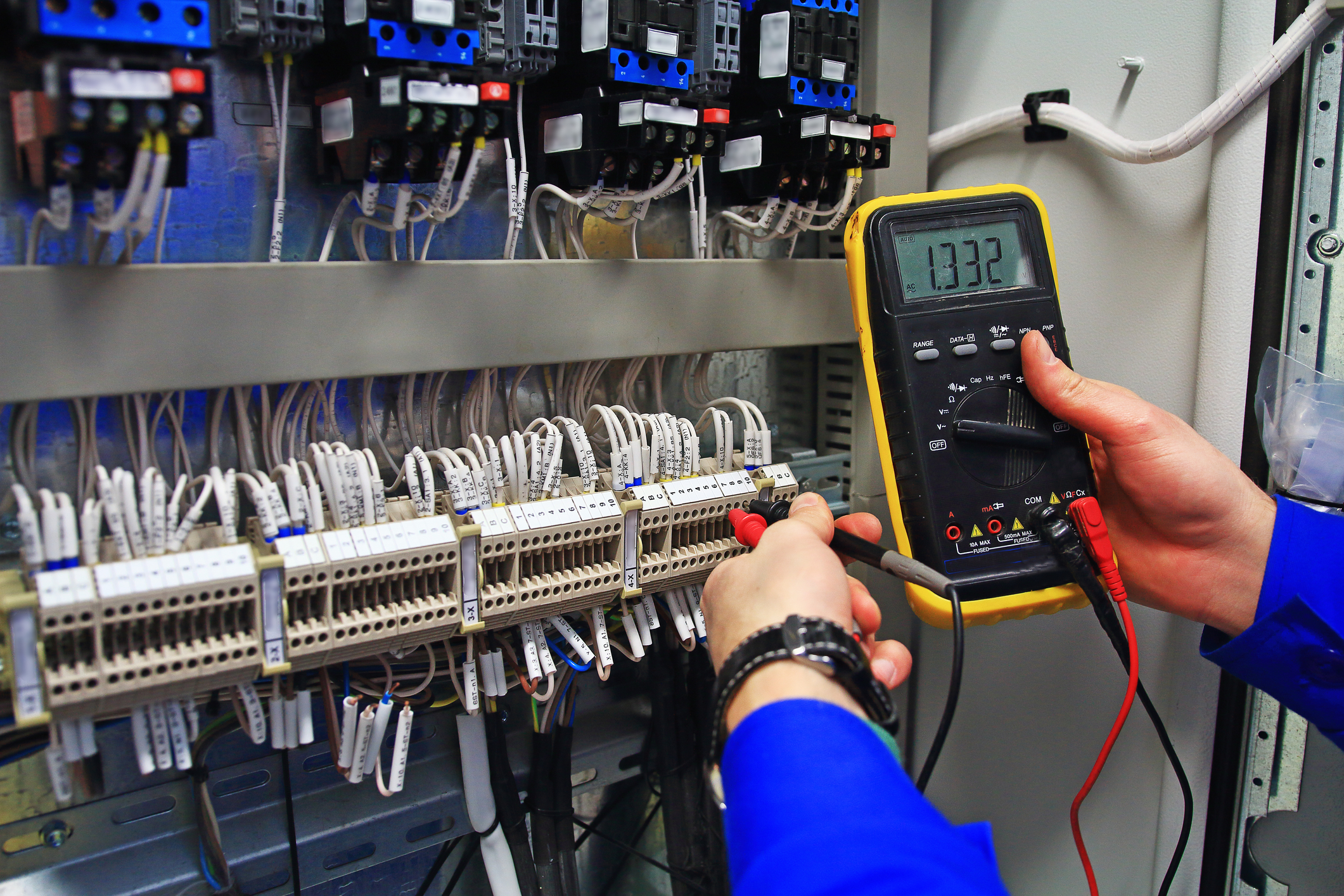
Before commissioning, panels must undergo insulation resistance testing, continuity testing, functional testing and verification against the design. JBB engineers follow a structured verification process based on BS EN 60204-1.
How BS EN 60204-1 Improves Reliability and Uptime
Compliance is about more than meeting a standard. When implemented correctly, BS EN 60204-1 significantly improves reliability, maintainability and uptime of industrial machinery. Adherence to the standard also supports efficient operation, reduces downtime, and optimizes processes across various applications.
Correctly protected devices reduce equipment stress
improved wiring reduces fault probability
correct segregation prevents interference and mis-operation
enhanced cooling extends component lifespan
accurate documentation accelerates fault-finding
correct earthing protects equipment and operators
✅ Uptime Improvement Case Example:
A food manufacturer saw a reduction in electrical breakdowns after upgrading legacy panels to BS EN 60204-1 standards with modern wiring, cooling, segregation and documentation.
The Role of Thermal Imaging in BS EN 60204-1 Compliance
Although not explicitly mandated by the standard, thermal imaging is one of the most effective tools for verifying compliance and identifying early-stage failures. Overheating terminals, overloaded components, poor segregation and inadequate cooling are easily detected using infrared analysis.
Thermal imaging supports the standard by providing:
evidence of safe operating temperatures
identification of high-resistance joints
detection of overloaded circuits
assessment of panel cooling effectiveness
verification of correct torqueing and wiring stability
How JBB Engineers Assess BS EN 60204-1 Compliance
JBB’s structured methodology reflects the organisation’s core operating model: Assess → Modernise → Protect → Prevent → Support. This ensures compliance checks are thorough, actionable and aligned with long-term reliability. Proper training for personnel involved in compliance assessments and ensuring secure access to compliance audit systems are essential to maintain high safety standards and effective audit processes.
📋 JBB Compliance Assessment Framework
Assess – Condition surveys, documentation reviews, wiring inspections, thermal imaging and compliance audits.
Modernise – Panel rewiring, component replacement, improved segregation, updated protection and corrected design flaws.
Protect – Enhanced cooling, surge protection, lifecycle monitoring and cyber readiness for PLC/SCADA systems.
Prevent – Preventive maintenance plans, thermal imaging schedules, torque audits and continuous improvement.
Support – Ongoing service agreements, breakdown support, documentation updates and engineering guidance.
Engineering Checks Performed During 60204-1 Compliance Audits
A thorough BS EN 60204-1 audit examines the complete electrical system of a machine or production line. Below are the key engineering checks performed by JBB Electrical. These checks ensure compliance with quality standards for different types of control panels used in various applications.
👉 Step 1: Physical Inspection and Panel Condition Assessment
Engineers inspect enclosure integrity, signs of overheating, cleanliness, wiring condition, cooling, segregation and component lifecycle status.
👉 Step 2: Documentation Review
Schematics, device schedules, terminal references, protection calculations and maintenance records are checked for accuracy and completeness.
👉 Step 3: Wiring and Termination Verification
We check cable routing, conductor sizing, colour coding, torque settings, cable protection and secure termination of every circuit.
👉 Step 4: Protective Device Inspection
Breakers, contactors, isolators, relays and RCDs are tested to confirm correct sizing, coordination and operation.
👉 Step 5: Functional and Electrical Testing
Engineers conduct insulation resistance tests, continuity tests, emergency stop verification, interlock testing and fail-safe checks.
Preventive Maintenance for BS EN 60204-1 Compliance
Compliance is not a one-time event. Equipment ages, wiring loosens, components degrade and loads change. To maintain compliance, ongoing preventive maintenance is essential. Preventive maintenance ensures that every crucial component in automation systems continues to function safely and reliably. JBB integrates compliance with thermal imaging, load testing, torque auditing and documentation updates.
annual compliance review of all panels
scheduled torque checks on terminations
upgrade of ageing contactors, relays and PSUs
thermographic surveys to detect hidden issues
review of control circuit integrity and emergency stop paths
documentation updates for any modifications
☑ BS EN 60204-1 Preventive Maintenance Checklist
inspect all terminals and apply correct torque levels
verify emergency stop circuits and safety relays
confirm correct segregation of power and control wiring
review labels, schematics and documentation for accuracy
analyse thermal images for hotspots or imbalance
assess component lifecycle status and replace outdated hardware
When Should a Control Panel Be Upgraded?
Panels should be modernised when their condition, documentation, components or protection no longer meet BS EN 60204-1. Common triggers include:
missing or outdated schematics
obsolete components or discontinued PLCs
overheating, hotspots or load imbalance
lack of segregation or cable management issues
expansion of machinery loads beyond original design
insurance or audit requirements
ℹ Engineering Note:
Modernisation is typically far more cost-effective than reactive repair. Upgrading panels to BS EN 60204-1 also reduces downtime risk and improves operational predictability.
FAQs
What risks does this issue create?
Non-compliant panels increase the likelihood of electrical fires, equipment failure, safety incidents, unplanned downtime and insurance issues. Hidden wiring or protective device faults can lead to catastrophic failure.
How does compliance affect this?
BS EN 60204-1 ensures the electrical equipment of machinery is safe, correctly protected and engineered to prevent hazardous conditions. It supports PUWER, improves audit readiness and reduces operational risk.
What preventive measures should be taken?
Regular compliance audits, thermal imaging surveys, torque checks, documentation updates, component lifecycle reviews and emergency stop testing maintain safety and reliability.
How do modern systems improve reliability?
Modern panels offer better cooling, safer wiring practices, improved protection devices, advanced PLC diagnostics and superior documentation. These enhancements significantly improve uptime and reduce failure risk.
Next Step: Request a Compliance & Breakdown Prevention Assessment
If your control panels have not been assessed recently, or if documentation is incomplete, BS EN 60204-1 compliance issues are likely present. JBB’s Compliance & Breakdown Prevention Assessment provides a structured review of your panels, wiring, protection, documentation and lifecycle status. You will receive a clear compliance roadmap and recommendations to modernise, protect and future-proof your systems.
Request a Compliance & Breakdown Prevention Assessment today to ensure your control panels are compliant, safe and engineered for long-term reliability.