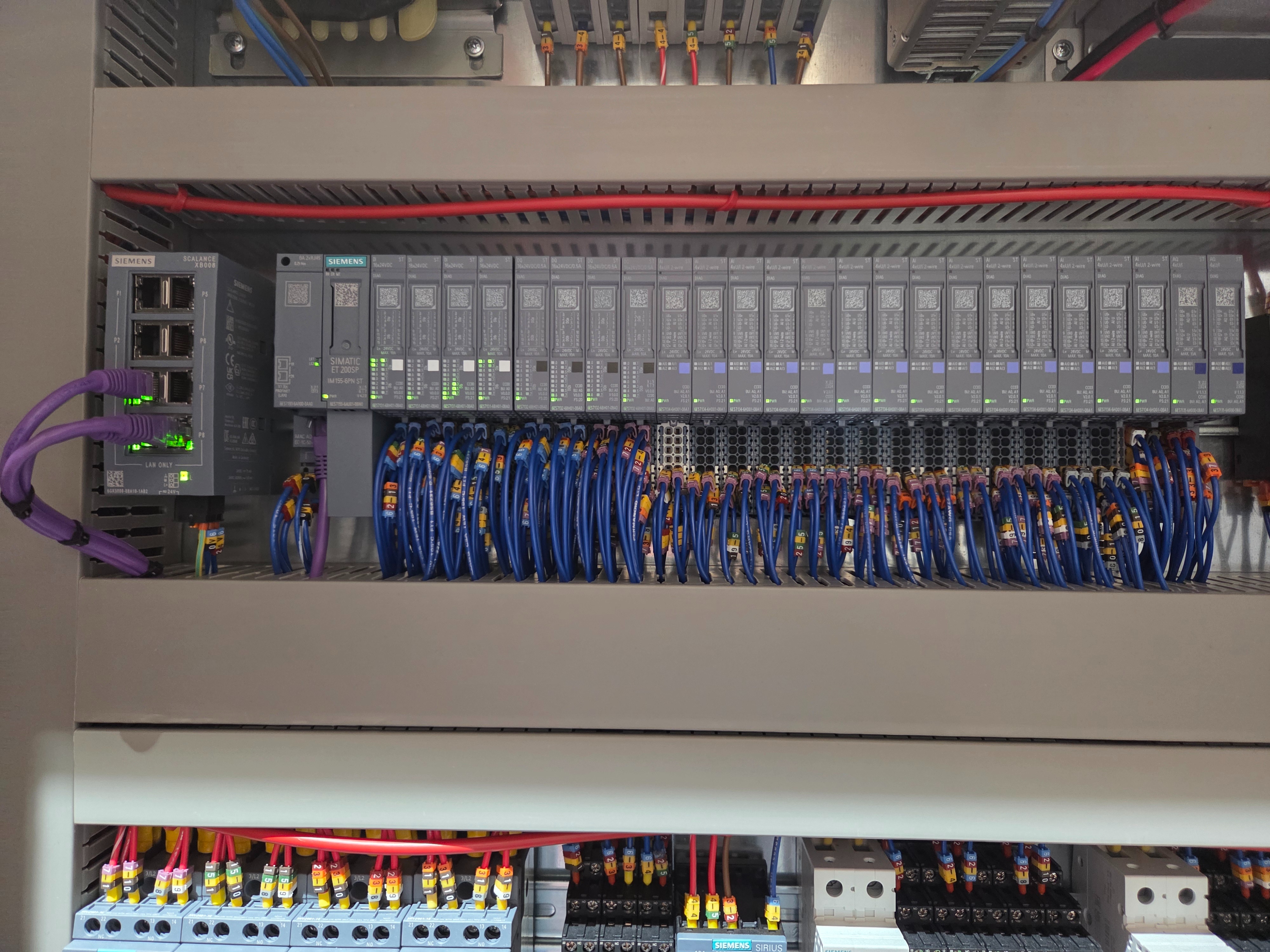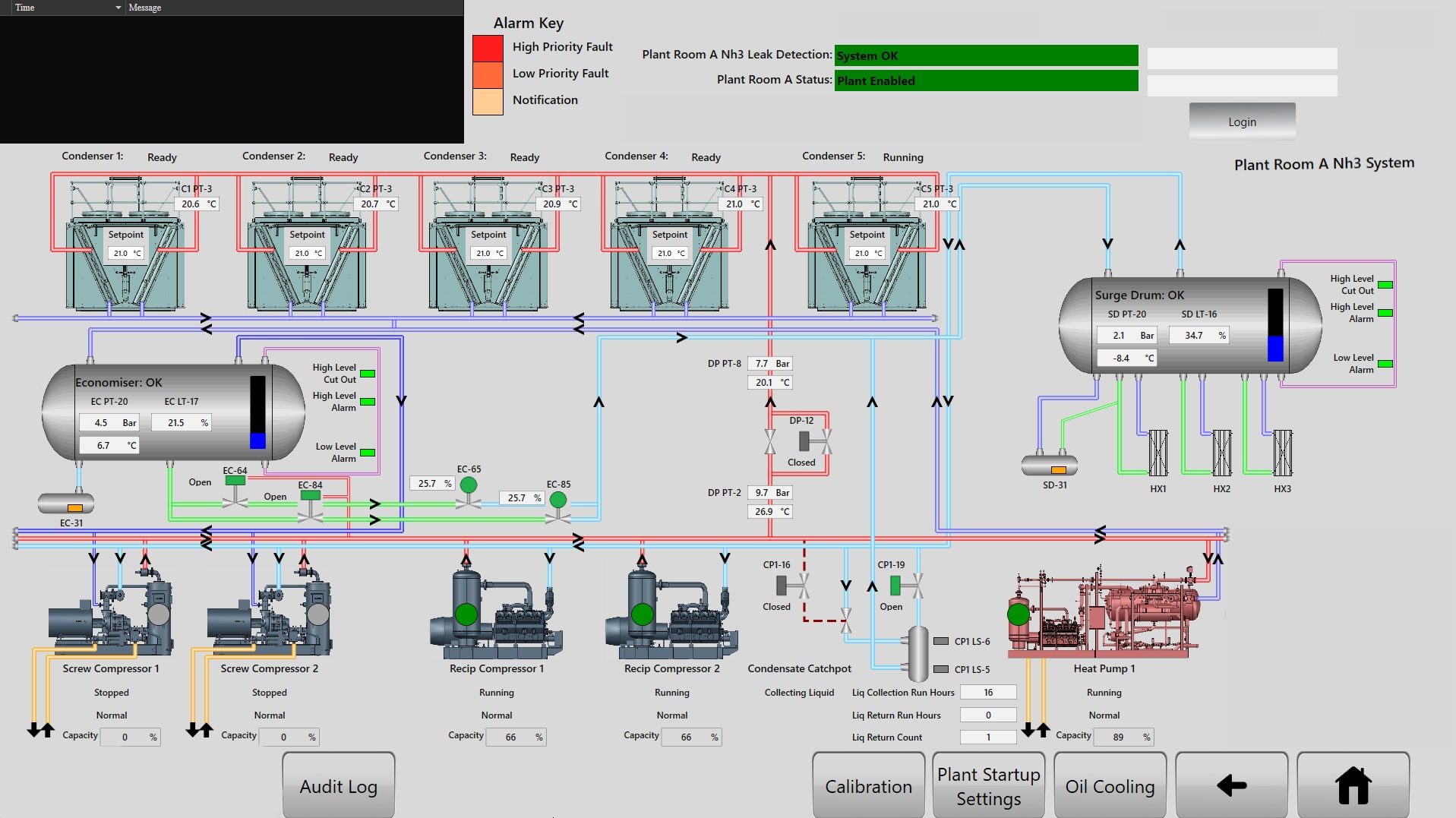
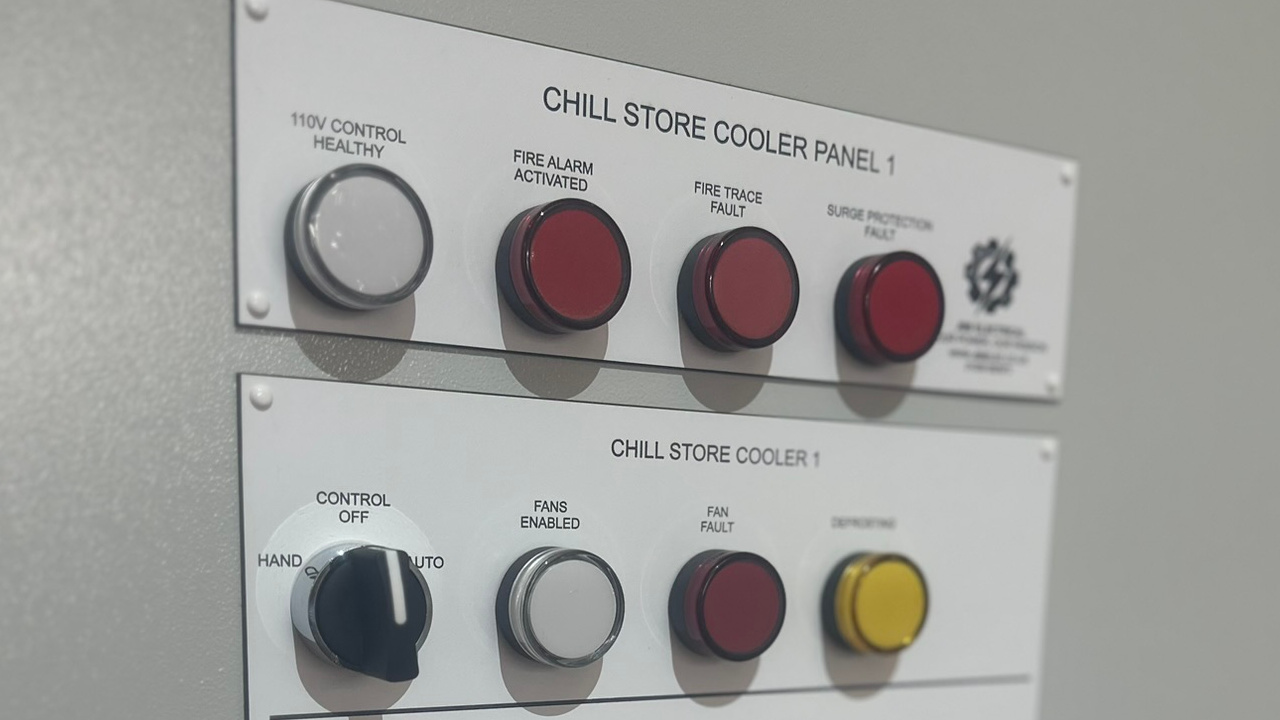
Understanding a PLC with example scenarios reveals something that abstract theory cannot: programming quality is what separates a system that prevents failures from one that merely records them.
This article works through three concrete industry scenarios - food processing, cold storage, and pharmaceutical operations - to show exactly how fault detection logic, alarm prioritisation, and data logging are built into PLC control systems. The goal is not to explain what a PLC is. It is to show what the programming decisions inside one actually do when conditions on the plant floor start to degrade.
What Makes a PLC System Genuinely Preventive Rather Than Just Reactive
The distinction is not hardware. Two facilities running identical PLC controllers can have completely different reliability profiles depending on how those controllers are programmed.
A reactive PLC installation responds to faults after they have occurred. An alarm fires, an operator investigates, and the process restarts once someone has addressed the symptom. The system is doing its job in the narrowest sense - it detected a problem and flagged it. But the detection happened at the point of failure, not before it.
A predictive system uses structured fault detection routines to monitor the conditions that precede failure: motor current trending upward, temperature deviating from setpoint before it breaches the alarm threshold, a sensor reading that is changing faster than the process should allow. The program logic is written to act on those early signals, not wait for them to become events.
The Programming Architecture Determines the Outcome
Modular code structure, fault detection routines, alarm prioritisation hierarchies, and data logging frequency are not optional additions to a PLC program. They are the architecture that determines whether the system is reactive or genuinely predictive. A basic installation without these structures leaves operators dependent on physical symptoms - noise, heat, odour - rather than early electrical or process signals.
JBB Electrical designs control logic across Siemens, Allen-Bradley, and RDM platforms to address exactly this distinction. The programming methodology covers fault detection, alarm management, and data logging as integrated design requirements - not features to retrofit once the system is running.
Food Processing Example: How Interlock Sequences Stop a Conveyor Fault Becoming a Full Shutdown
Consider a food manufacturing line where product moves through three stages: filling, sealing, and labelling. Each stage is driven by a separate motor-controlled conveyor, and each conveyor is monitored by the PLC for speed, torque, and downstream sensor status.
A fault develops at the sealing conveyor. A mechanical issue causes the belt to slow below its target speed. Without interlock logic, the filling station upstream continues to run at full rate. Product accumulates at the sealing station, jams occur, and by the time an operator responds, the filling station itself may have also faulted - and product is lost across all three stages.
With a properly programmed interlock sequence, the outcome is different. The PLC monitors the sealing conveyor's speed feedback signal continuously. When that signal falls outside the defined operating window, the PLC logic evaluates the condition against a pre-set threshold and time delay - ruling out a transient blip before acting. Once the fault is confirmed, the program holds the filling conveyor in a controlled pause state, brings the upstream feed to an orderly stop, and generates a specific fault code rather than a generic alarm.
Illustrative Example - Food Processing Conveyor Interlock
Equipment: Three-stage conveyor system on a food processing line. Finding: Sealing conveyor speed drops to below operating threshold due to a developing mechanical fault. JBB engineering action: PLC interlock logic holds the upstream filling conveyor in a controlled pause state, generates a fault-specific alarm code, and logs the event with timestamp. Operational consequence avoided: Upstream product accumulation, multi-station jam, and extended shutdown are prevented - the fault is contained to the sealing station and the operator receives actionable diagnostic information rather than a generic trip.Illustrative example based on representative JBB project work.
This is what interlock sequencing achieves in practice: containment of the fault to the affected stage, an orderly state across all other equipment, and a fault message that tells the operator exactly where to look. The operator does not have to diagnose from physical symptoms. The program has already done that.
PLC automation examples in food manufacturing consistently show that alarm prioritisation is equally important here. If every event - minor sensor fluctuation, low-priority warning, genuine fault - fires the same alarm, operators develop alarm fatigue. Critical events are missed or delayed. A well-structured program assigns alarm categories, filters nuisance alerts, and escalates only the signals that require immediate action.
Alarm Fatigue Is a Programming Problem, Not an Operator Problem
When every event fires the same alarm at the same priority level, operators cannot distinguish a nuisance sensor fluctuation from a genuine fault requiring immediate action. The result is systematic desensitisation: critical events are delayed or missed not because operators are inattentive, but because the program gives them no way to filter what matters. A properly structured alarm hierarchy - with defined severity categories, suppression rules for known transient conditions, and escalation logic for unacknowledged critical alarms - makes alarm management a designed outcome rather than an operational burden.
Cold Storage Example: The PLC Logic Behind Setpoint Alarms, Defrost Cycles, and Regulatory Data Logging
Cold storage operations face a specific challenge: temperature excursions that breach compliance thresholds are not always preceded by obvious warning signs. A refrigeration system can appear to be functioning while temperature is drifting, particularly during defrost cycles or periods of high ambient load.
How PLCs work in cold storage comes down to three interdependent logic structures: setpoint deviation management, defrost cycle control, and regulatory data logging.
- Setpoint deviation alarms: The program monitors chamber temperature against defined upper and lower limits. Critically, a well-programmed system uses a pre-alarm threshold - a warning before the compliance limit is reached - giving operators time to intervene before a regulatory breach occurs.
- Defrost cycle control: Defrost cycles cause predictable temperature rises. The PLC program accounts for these by suppressing pre-alarms during the defrost window while maintaining a separate hard limit that cannot be suppressed. This prevents nuisance alarms without masking genuine excursions.
- Regulatory data logging: Temperature readings, alarm events, and defrost cycle timestamps are logged at defined intervals directly by the PLC program. This data is stored in a format suitable for regulatory audit - structured, timestamped, and tamper-evident. It is built into the program from day one, not added manually by operators.
Illustrative Example - Cold Storage Temperature Deviation
Equipment: Refrigerated storage chamber with PLC-controlled temperature management. Finding: Chamber temperature rises to within 1.5°C of the regulatory limit during a period of high ambient load, with the defrost cycle not responsible. JBB engineering action: Pre-alarm threshold triggers an alert to the operator before the compliance limit is reached; the PLC logs the event with timestamps and the temperature trend data preceding the deviation. Operational consequence avoided: Product temperature excursion and the associated stock loss, regulatory non-compliance report, and retrospective manual record-keeping are all avoided because the program detected and logged the condition before it became a breach.Illustrative example based on representative JBB project work.
For refrigeration control systems, the data logging architecture is not a secondary consideration. Regulatory inspectors - whether food safety, pharmaceutical, or cold chain auditors - require evidence of continuous monitoring, not just post-hoc reports. A PLC program that generates this evidence automatically removes the reliance on manual records, which are inherently incomplete.
Pharmaceutical Example: How PLC Programming Enforces Batch Validation and Generates the Audit Trail Inspectors Require
Pharmaceutical batch processing is where the consequences of inadequate PLC programming are most clearly defined. Regulatory frameworks require that batch processes are not just completed correctly, but that the control system prevents out-of-sequence operations and generates an unbroken record of every step.
A well-programmed PLC does not merely monitor a batch process - it enforces it. The control logic is structured so that each process step can only be initiated when all prior steps have been completed and confirmed. An operator cannot advance to the mixing phase before the vessel has been cleaned and verified. The program holds the sequence in the correct state until the required conditions are met.
Every state transition - step initiated, condition met, step completed, alarm acknowledged - is logged with a timestamp, the identity of the operator action where applicable, and the relevant process parameter values. This data forms the audit trail that validation inspectors require. It is generated automatically by the program, not reconstructed from paper records after the fact.
Sequence Enforcement Is Not a Feature - It Is a Compliance Requirement
In pharmaceutical operations, a PLC program that allows process steps to be bypassed or executed out of order creates a validation gap regardless of whether an error actually occurs. Regulatory inspectors assess whether the control system is capable of preventing non-conformances, not just whether non-conformances happened. Sequence enforcement logic must be explicitly designed and documented in the program architecture.
The audit trail generated by the PLC program also needs to be structured correctly to satisfy inspection requirements. Timestamps must be synchronised to a reliable time source. Parameter values must be recorded at appropriate intervals. Alarm events must include both the trigger condition and the operator response. These are programming decisions made during development - they cannot be reliably retrofitted to a system that was not designed with them in mind.
SCADA Integration: What Real-Time Visibility Gives Operations Teams - and What Its Absence Costs
PLC SCADA integration examples consistently reveal the same pattern: the operational difference between a site with full visibility and one without it is not just efficiency - it is the speed at which problems are identified and contained.
A SCADA system connected to the PLC network gives operations teams live process data across every monitored point: motor status, temperature trends, conveyor throughput, alarm states, and historical performance. An operator or manager can see - in real time - whether the process is running within parameters or beginning to deviate. They can interrogate trend data from the past hour, the past shift, or the past month without leaving the control room.
When SCADA integration is absent or poorly implemented, the picture is different. Operators work from local HMI panels with limited context. Supervisors receive information only when someone walks to the panel and reads it. Alarm escalation depends on physical presence rather than automated notification. Historical data - if it exists at all - is fragmentary.
The Operational Cost of Absent SCADA Visibility
Without SCADA integration, a facility's response speed is bounded by the physical distance between the fault and the person who needs to know about it. Developing faults that appear as gradual trend deviations go undetected because no one is continuously watching the trend data. Alarm escalation depends on someone being at the right panel at the right time. Post-incident analysis becomes reconstruction from incomplete information rather than review of structured, timestamped records. Each of these gaps extends the period between fault development and containment - directly increasing the operational and compliance cost of every event.
- Faults that develop gradually go undetected until they reach the alarm threshold, because no one is watching the trend.
- Alarm floods - multiple simultaneous alerts from a cascading fault - cannot be prioritised without historical context.
- Post-incident analysis is slow or impossible because the data was never captured.
- Compliance reporting requires manual data collection, introducing delay and the risk of error.
JBB Electrical's PLC programming and SCADA/HMI integration work covers alarm escalation logic, historical trend data configuration, and operator interface design. The integration is treated as a design requirement from the outset - not a separate project to be commissioned after the control system is already running.
The Programming Decisions That Separate Basic Installations From High-Reliability Control Systems
The three industry scenarios above all point to the same underlying principle: automation control system reliability is determined by programming architecture, not by hardware specification alone.
A basic PLC installation connects inputs to outputs, reads sensor values, and activates outputs when conditions are met. It will run a process. What it will not do - without structured programming - is detect the early signs of failure, contain faults when they occur, or generate the evidence that compliance frameworks require.
- Fault detection routines: Explicit logic that monitors operating parameters against defined windows - not just alarm limits, but trend rates and deviation duration - so the program responds to developing conditions rather than failure events.
- Alarm prioritisation hierarchy: A structured categorisation of alarm types so that critical faults reach operators immediately and nuisance alerts do not mask them. Without this, alarm fatigue is inevitable.
- Interlock and sequence logic: Hard constraints in the program that prevent unsafe or non-compliant operation, not warnings that operators can ignore.
- Data logging frequency and format: Defined logging intervals appropriate to the process, structured for the compliance framework applicable to the facility, and stored in a format that can be retrieved and presented to auditors.
- Modular code structure: Programs written in clearly organised, documented modules so that future modifications can be made safely without introducing unintended interactions - and so that any competent engineer can read and maintain the code.
Five Programming Decisions That Separate Reliable Systems From Basic Installations
Fault detection routines: monitoring trend rates and deviation duration, not just instantaneous values against a hard trip limit. Alarm prioritisation hierarchy: categorised alarm severity so critical events reach operators immediately and nuisance alerts are filtered rather than stacked. Interlock and sequence logic: hard program constraints that make unsafe or non-compliant operation impossible, not warnings an operator can override. Data logging frequency and structure: captured at appropriate intervals, in a format suitable for regulatory audit, without manual intervention. Modular code structure: clearly organised, documented program modules that can be safely modified by any competent engineer. Each of these is a design decision made during programming - they are expensive and disruptive to retrofit to a system that was not designed with them in mind.
Evaluating Your Current System
The practical test for any existing PLC control system is this: can the program detect a developing fault condition before it becomes a process failure, and can it generate the evidence of what happened without manual intervention? If the answer to either question is uncertain, the programming architecture - not the hardware - is where the gap is.
These decisions are made during the programming phase. They are difficult and expensive to retrofit. A facility that commissions a PLC installation without specifying fault detection logic, alarm management, and data logging requirements will have a working system - but not a reliable one in the sense that industrial operations require.
The JBB PLC Control System Methodology
The JBB PLC Control System Methodology
Assess
We review the existing PLC control system - whether running on Siemens, Allen-Bradley, or RDM platforms - to identify gaps in fault detection routines, alarm prioritisation, interlock logic, and data logging architecture that leave the facility dependent on physical fault symptoms rather than early process signals.
Modernise
Using EPLAN Electric P8 for documentation and in-house manufacturing capability for panel-level changes, we redesign the control logic to implement structured fault detection, sequence enforcement, and alarm categorisation - replacing generic trip responses with specific, actionable fault codes that tell operators exactly where to investigate.
Protect
We build BS EN 60204-1 compliant safety interlock logic and SCADA/HMI integration directly into the program architecture, ensuring that temperature setpoint deviations in cold storage, conveyor fault conditions on food processing lines, and batch sequence violations in pharmaceutical operations are all detected and contained before they escalate.
Prevent
Regulatory data logging for food, cold chain, and pharmaceutical compliance frameworks is embedded in the program from day one - not added retrospectively - with logging frequency, timestamp synchronisation, and audit trail structure defined to satisfy inspection requirements without manual record-keeping.
Support
As a NICEIC-approved contractor, JBB Electrical provides ongoing support under the same team that designed, built, and tested the system - eliminating the accountability gaps that arise when design, manufacture, and installation are divided between different contractors - with documented code, operator training, and a maintenance protocol that keeps the control system aligned with operational requirements as the facility evolves.
JBB Electrical has delivered this methodology across food processing, cold storage, and pharmaceutical sites since 1966, with intelligent engineering at the programming level that translates directly into fewer unplanned stops, defensible compliance records, and operational visibility that supports informed decisions rather than reactive ones.
Relevant JBB service: PLC & Software Development
Next Step: Request a Compliance & Breakdown Prevention Assessment
Next Step: Request a Compliance & Breakdown Prevention Assessment
A Compliance & Breakdown Prevention Assessment identifies the electrical, compliance, and breakdown risks affecting your operation, and sets out the engineering actions needed to reduce downtime, protect reliability, and keep your infrastructure defensibly compliant. Request a Compliance & Breakdown Prevention Assessment today to confirm whether your PLC control system's fault detection, alarm logic, and data logging architecture are genuinely preventing failures - or simply recording them.
Compliance & Breakdown Prevention Assessment